By H.M. Rajaonarivelo, N.L. Rabenantoandro, D. A. Martin, E. Raveloaritiana, S. Andriamampianina, M. R. Soazafy, B. A. Ramiandrisoa, M.J. Santos, and O.S. Rakotonarivo
This Plain Language Summary is published in advance of the paper discussed. Please check back soon for a link to the full paper.
Madagascar’s native forests are unique and home to extraordinary biodiversity, but they continue to disappear. However, tree-based restoration efforts often rely on fast-growing introduced species plantation because they provide wood and income quickly. We wanted to understand what communities want from restoration, what prevents native-tree restoration, and what would make it worthwhile.
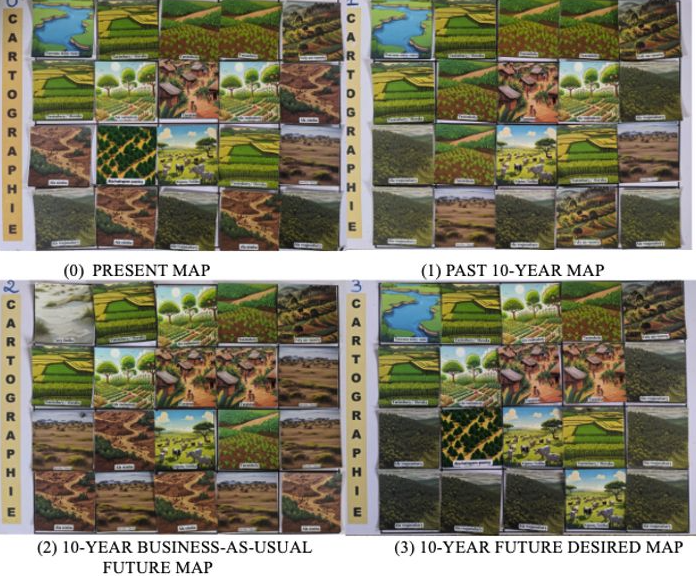
We worked with local communities across 30 villages in three different forest biomes of Madagascar, where we carried out 45 participatory mapping sessions. Participants described what their landscapes looked like about 10 years ago, what they look like today, what they may look like in 10 years if current trends continue, and the future they would prefer. For each scenario, we also discussed why landscapes are changing and what could support forest restoration.
Communities perceived major losses of native forest over the past decade. They linked these changes mainly to the expansion of farming, charcoal and timber production, as well as fire and migration. If current trends continue, they expect further forest loss and no expansion of native-tree restorations, particularly in the humid and transitional forest regions. Daily livelihood needs, uncertain land rights, and concerns about losing access to land and natural resources all shaped these expectations.
Their preferred future was very different. Participants imagined much more native forest, especially on land that is currently open or unused. However, they made clear that this would require practical support particularly for their local livelihoods, more secured land rights, and a stronger role for communities in decisions about their landscapes.
Our study shows that successful forest restoration is about more than planting more trees. It also depends on whether local people see restoration as useful, fair, and compatible with the future they want.

