By Dr. Sebastian Garbe
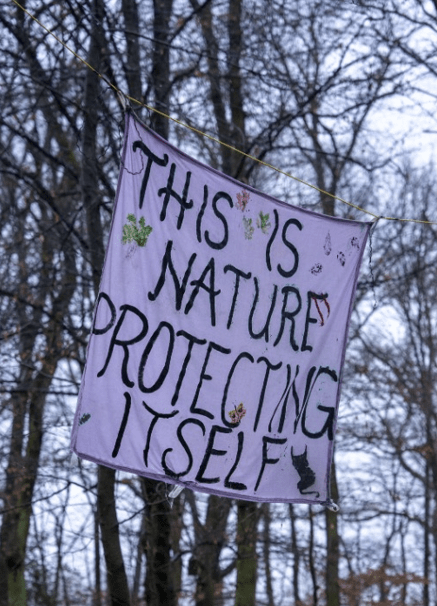
Forest occupations are places where people live in forests to stop industrial projects like sand and gravel mining or roads that would cut down or dig up the forest. In studying forest occupations in Germany, the main question is simple: what kinds of care happen in these occupations—between people, and also between people and the forest itself?
This project began for me with a small experience. I visited an occupation in September 2025 and slept in a tent on the forest floor. The night was cold, but in the morning, I felt grateful that the forest had “hosted” me. Later, one activist told me that the forest gives them water, air, a place to sleep, and a feeling of comfort. So they want to give something back by protecting it. That idea of giving and receiving care shaped my research.
To understand this better, I visited two forest occupations that resist sand and gravel mining and are connected through the “Wald statt Asphalt” (in English: “Forest not asphalt”) network. I interviewed people living in occupations and local forest rangers. I also learned from many everyday conversations and observations during my visits. What I found is that these occupations are not only about protest. They are also about daily care work: cooking, cleaning, building simple shelters, checking in on each other, and supporting people who are stressed or unwell. At the same time, many activists describe the forest as an active partner in their lives. They receive food, medicine, shelter, and a sense of belonging from the forest. In return, they try to protect animals and plants, repair damaged structures, and defend the forest from destruction.
I conclude that forest occupations can create a rare kind of relationship. People and forests supporting each other. This matters because it points to more respectful ways of living with nature, especially at a time when many forests are under pressure from climate change and industry.

