By Marianne Stoessel, Felicia Wikinger, and Regina Lindborg
The long history of reindeer herding plays a key role in shaping the mountain ecosystem in northern Sweden. Through their grazing, reindeer can slow down the expansion of shrubs in the warming tundra. This slowing effect is important, as shrub expansion threatens tundra plant diversity. Yet, reindeer grazing behaviour is changing as human activity, but also predator presence, have increased in the Scandinavian mountains. In this study, we wanted to understand how these different pressures affect where reindeer go and how much they graze.
To do this, we tracked reindeer in three mountain regions of northern Sweden using GPS collars and 3D-motion sensors. The GPS showed us where the animals were, while the 3D-motion sensors enabled us to monitor how long they grazed and where they grazed in the landscape. We then analysed reindeer presence and grazing activities in relation to hiking trails, buildings, landscape features, and predator presence.
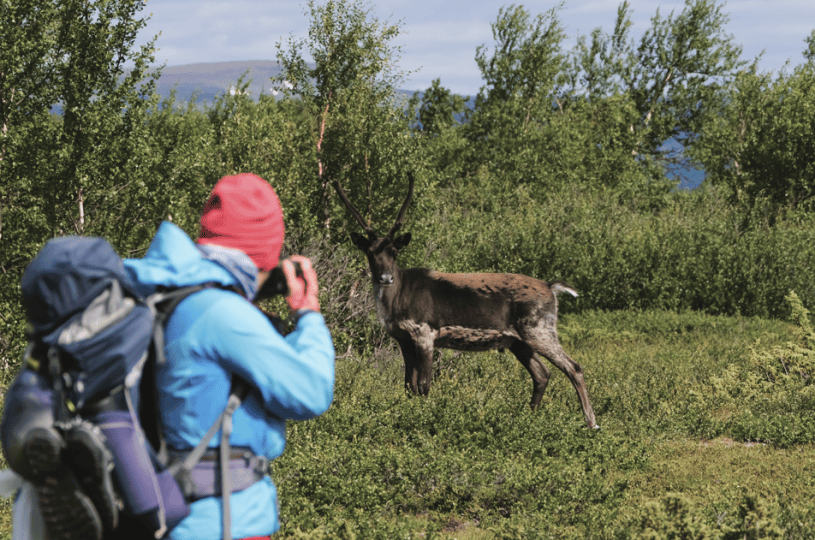
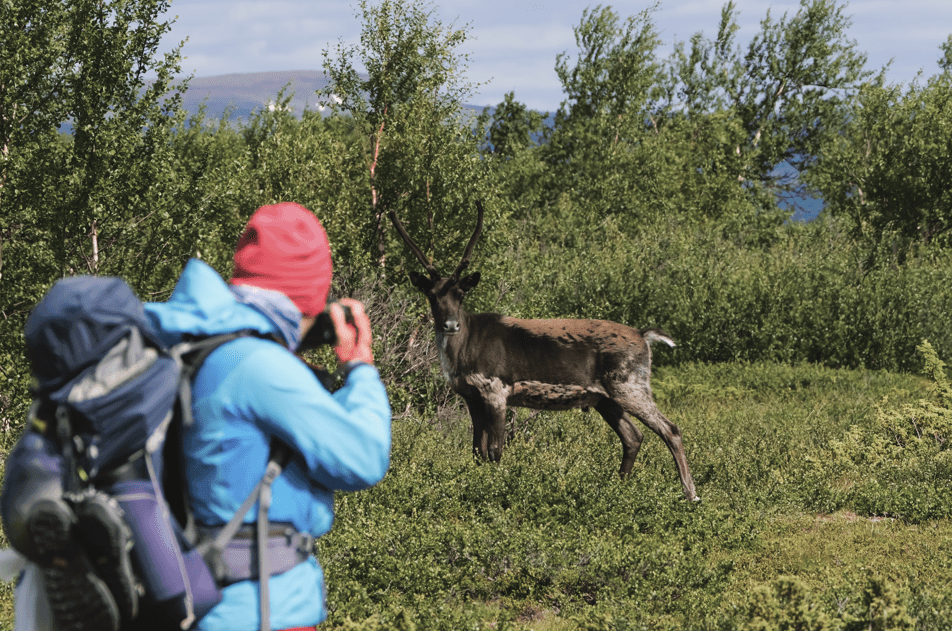
We found that natural conditions, such as vegetation types and temperature, were the main factors shaping where reindeer spent time and how long they grazed. However, human activity also played an important role: Reindeer tended to avoid large buildings and busy areas, and they appeared more tolerant of smaller cabins and hiking trails. Yet, even when reindeer stayed close to these areas, they often spent less time feeding there, suggesting that human presence can still disturb them.
We also found that predators changed how reindeer responded to human presence. In some cases, reindeer stayed closer to human infrastructure when predators were present locally, possibly using these areas as safer spaces. This result shows that human presence in the mountains can indirectly influence the relationship between a predator and its prey.
Our study shows that monitoring only where animals are located in the landscape can miss important changes in their behaviour. Even if reindeer appear to tolerate people, people can still disrupt their feeding. As tourism continues to grow in the Scandinavian mountains, human interactions with the tundra wildlife, including both reindeer and predators, will likely affect vegetation and the wider ecosystem. Understanding these hidden effects human presence can have in the tundra can help guide land-use decisions that will support a sustainable future for reindeer herding, and also the tundra ecosystem.

