By Nike Doggart, Dominick Spracklen, Carly Reddington, Edward Butt, Richard Cuthbert, Mary McEvoy, Charles Kezilahabi Meshack, Muhammad Ali Nawaz, and Mohan Pandey
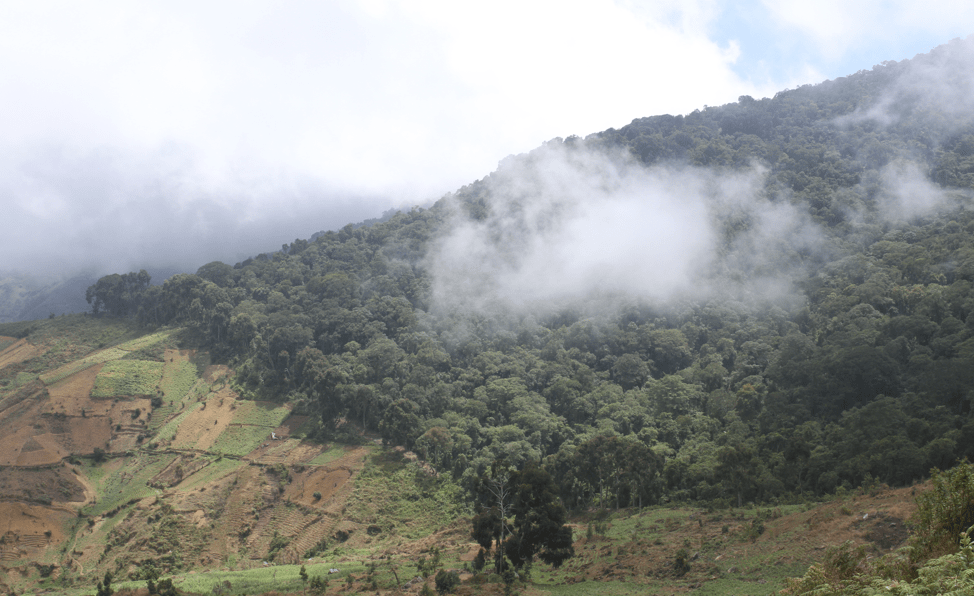
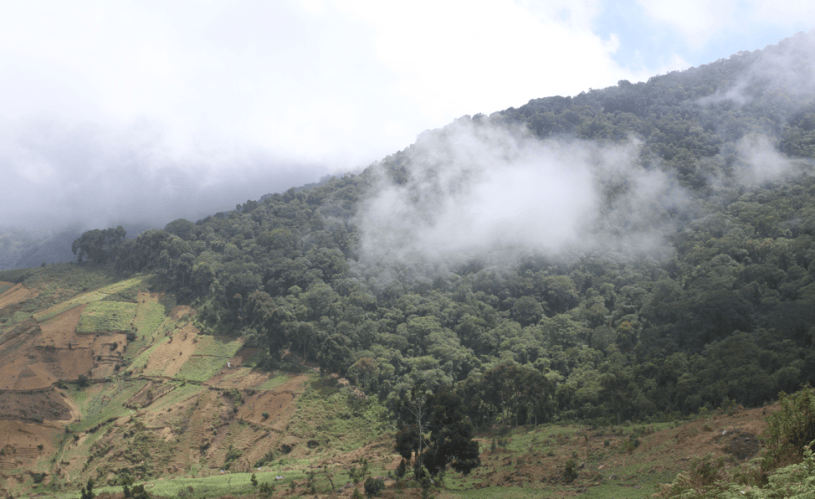
Photo Caption: Forest-farm edge in the Uluguru Mountains, Morogoro Region, Tanzania. Strengthening links between NGOs and researchers can help communicate research on how tropical forests cool nearby farms and support local rainfall.
Tropical forests do more than store carbon; they also help shape local climates. They can cool surrounding areas and increase rainfall, which is important for both climate change mitigation and adaptation. When people understand these local climate benefits, they may be more motivated to protect or restore tropical forests, creating wider gains for the environment, the economy, human health, and biodiversity. Environmental non-governmental organisations (NGOs) often act as a bridge between scientific research and decision-makers, yet we know little about how well they understand these local climate benefits or how they use this knowledge.
This study set out to explore how scientific findings on tropical forests’ local climate effects align with the information environmental NGOs need. A review of scientific literature found 69 relevant studies. Most of this research focuses on multi-country areas in tropical South America and Asia, with far fewer studies in Africa. Much of the research examines how deforestation affects temperature and rainfall; fewer studies look at the effects of forest restoration or stable forest cover. Only a small number of studies explore outcomes related to biodiversity, health, agriculture, or the economy.
To understand how NGOs use this knowledge, this study surveyed and held discussions with 44 environmental NGOs working across 24 tropical and subtropical countries. Many NGOs are already using research on forests’ local climate impacts, relying mainly on peer reviewed publications and scientific conferences. NGOs most valued research findings that show how tropical forests affect local rainfall, temperature, and biodiversity.
Overall, existing research aligns well with NGO priorities on temperature and rainfall. However, NGOs need more information about the connections between the local climate impacts of forests and biodiversity, human health, livelihoods, and agriculture than current research provides. They also strongly prefer local, recent, or real-time information. NGOs show clear readiness to participate in research, indicating that research co-production offers a potential strategy for creating research that is more relevant, usable, and aligned with their needs.
This study concludes that better local-scale information and improved tools would help NGOs more effectively communicate forest benefits and protect tropical forests.

