For Black History Month 2023, the British Ecological Society (BES) journals are celebrating the work of Black ecologists from around the world and sharing their stories. In this blog, Arleu Barbosa Viana-Junior shares his story and journey in academia.
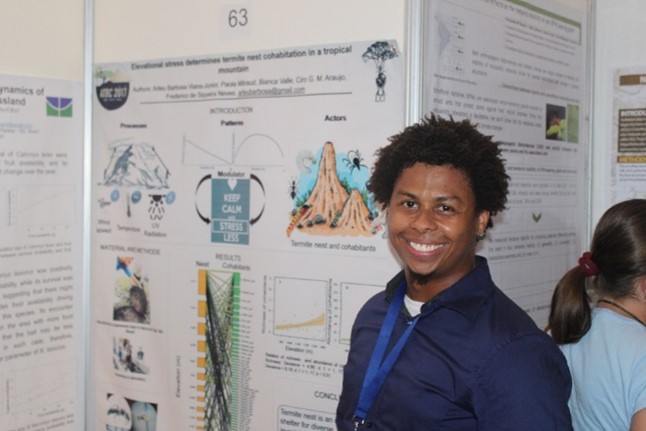
Name: Arleu Barbosa Viana-Junior
Affiliation: State University of Paraíba, campus I in Campina Grande
Ecology interests in three keywords:
- Community Ecology
- Urban Ecology
- Synthesis and Meta-analysis
How did you get into ecology?
As an undergraduate biology student, I was always fascinated by studying genetics. I thought it was the best thing in the world to imagine that I could be in a laboratory, wearing a lab coat and appearing on the country’s important news. In 2006, it was a decade in which there was a lot of talk about stem cells. A Brazilian researcher called Mayana Zats inspired me a lot on the topic.
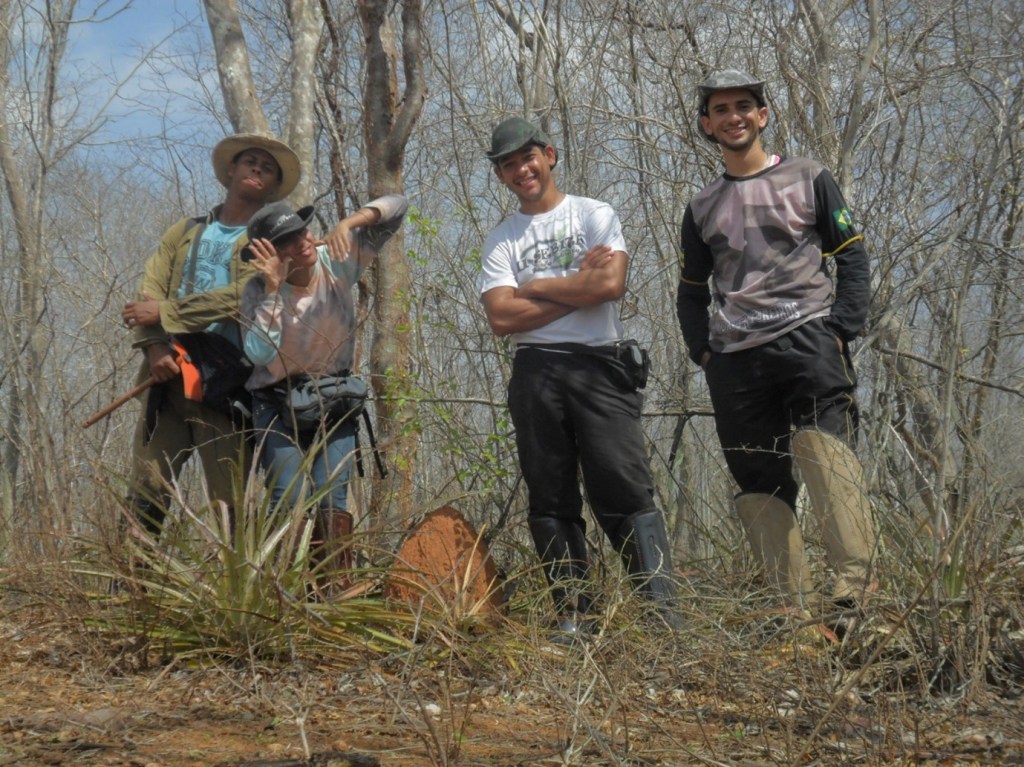
In 2008, my General Ecology teacher, Maxwell Silveira, had the brilliant idea of doing a field class in which we would spend a weekend in contact with a dry forest, here called Caatinga, but it is very degraded. Without knowing much at the time about the conservation status of the site, as it is a very small forest area that in 30 minutes we could cut through the entire fragment, this experience of being there in the middle of nature was wonderful for me. Even more so at a university where this type of initiative was not common. We were the first class of this professor to have a field experience like this. The experience for the first time of sleeping in a tent, collecting at night, talking to friends in front of the campfire, making food with simple equipment (basically we only ate ramen, lol) was what changed my life and actually determined my career. That I would continue from now on. When I returned from the field, I wanted to be this professor’s student to do research and that’s where I completed my biology degree studying the ecology of termite communities in the Atlantic Forest.
For a simple experience, very modest, by the way, of being in the field and changing my life, I value undergraduate students doing fields. I think the basis of ecological knowledge is going into the field and collecting data and having this experience as varied as possible.
What are you researching/working on right now?
I am currently a visiting professor at the State University of Paraíba. Here I develop my research with Urban Ecology, and we aim to understand the mechanisms that affect the abundance, distribution and composition of arboreal arthropods in cities in the Brazilian semi-arid region. Urban ecology is an emerging science in Brazil, and many of the studies are concentrated in the large Brazilian metropolises that are geographically on the east coast of the country, that is, cities dominated by the Atlantic Forest (Sartori et al 2023). Brazil has one of the largest areas of dry forest in the Neotropical region (Dryflor 2016), and among Brazil’s phytophysiognomies (Amazon forest, Savanna, Swampland, Grassland), the Caatinga is the second region with the highest population density, behind only the Atlantic Forest, however, is one of the biomes with the least study on urban biodiversity. This highlights the need for basic knowledge of the processes that structure biodiversity within this urban context. Before being a visiting professor in the northeast of Brazil, I also developed a project with urban ecology in the city of Belém, in the state of Pará, where it is dominated by the Amazon Rainforest, during my post-doctoral internship, in addition to having done research on ecology of the restoration in bauxite mining areas in the Amazon.
What do you enjoy most about your work or ecology in general?
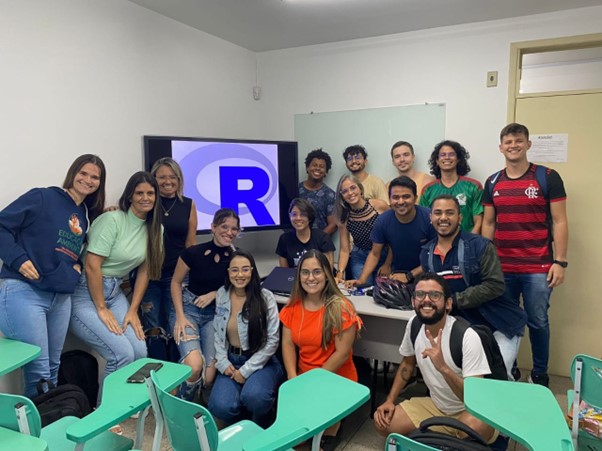
Understanding patterns through data analysis is what excites me most about ecology. I completed my undergraduate, master’s and doctorate studies focused on studying termites. This was the group that formed me in academic life, but I realized at the end of my doctorate that studying ecology should free you from the organisms you have a passion for or affinity with. Ecologists study patterns, processes and mechanisms and the animal or plant is simply the best model for your scientific question. When I realized that I didn’t need to be a termite ecologist, this thinking I opened the doors to perspectives far beyond what I could imagine today. Currently, termites are the animals with which I have done the least work. As I was lucky enough to develop good analytical skills using the R software, and I am grateful to many of the professors who passed by me and taught me a lot and still teach me today (Dr. Frederico de Siqueira Neves, Dr. Ricardo Solar, Dr. Og de Souza), I began to collaborate on several different projects which I was able to have the opportunity to study. Things far beyond my training. So, what I tell my students is that the thing I like most about my work and about ecology is a beautiful, well-planned Excel table with the species and biodiversity you have lol. In terms of organism models, in addition to termites, I was able to collaborate and study different organisms such as bats, birds, agouti, wild boars, ants, beetles, flies, woody plants, and fungus. In addition to these groups, I was also able to study population ecology, behavioural ecology, road ecology, animal-plant interactions, mountainous environments, fire, animal management and animal welfare. So, understanding patterns through data, using the appropriate analytical tool and exploring the results visually is one of the things I enjoy most.
Are there any aspects of your academic career / personal journey as a Black ecologist that you wish to share (to encourage, raise awareness etc).
I guess what I can say about encouragement is that my fellow people of colour can believe in occupying these spaces that are also ours. I know it’s not easy to look to the side and ahead and not have a frame of reference. But if unfortunately, I couldn’t have this reference, let’s do our best to be someone’s reference. Believe me, we can be. To this day, I get goosebumps when I remember students at the beginning of their degree, during this recent period as a visiting professor, saying how cool they thought it was to see me there in front teaching them with my black curly hair. I didn’t have a reference from a professor during my learning period (undergraduate, master’s and doctorate), so let us be a reference for someone.
Are there any ongoing issues in the ecological / academic landscape that you would like to highlight or have experienced?
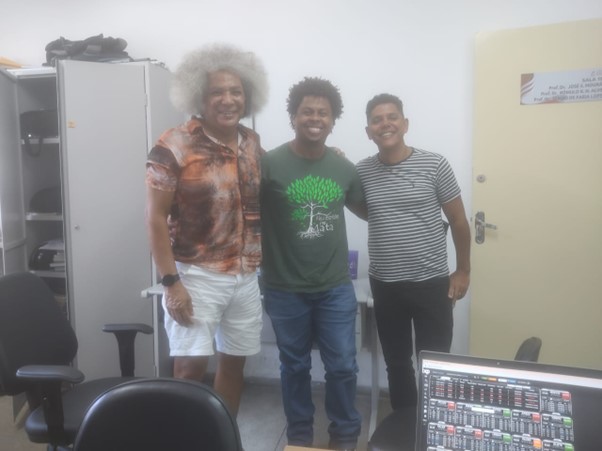
The power of representation. Currently, here at the State University of Paraíba, I am in a place where I can represent and feel represented. I think it’s one of the few higher education places with more square meters of black professors that I’ve ever been able to find. And I don’t know why, it gives such a great and good breather. Here I feel at home, and I feel in the place I want to be to live my life. People here treat me really well, but I don’t know, having people like Dr. Jose Mourão, Dr. Andre Pessanha and Dra. Juliana Severiano in the same work environment as I make it different. This is the power of representation.
If you could see one change in academia to positively impact Black ecologists, what would that be?
More opportunities. Brazil has a mostly black population, and leadership positions are occupied by white people, without even mentioning the entire racial structure we have in our country. Brazil is known as a happy country, with happy people, but it is still a country that is internally racist at its roots. We need to equalize power structures, especially in academia. More black ecological professors, more black biology and ecology students in postgraduate courses. We have to do this by improving exit and arrival opportunities for these most vulnerable people. That’s the change I hope to see, more opportunities. And not just for black people, but for minority populations such as women, LGBTQIA+.
Shout out your peers! Any black ecologists or groups who are doing work you admire?
There aren’t many, but the ones I know are brilliant. Firstly, my supervisor during the post-doctoral period, Dr Marlucia Bonifacio Martins, a strong, powerful black woman who can be said to be the queen of fruit-flies in Amazonia. I remember like today, in 2018, when I was admitted to an interview for a post-doctoral position in her research team, where through the video call and when we saw each other for the first time she said: “-Look, another black guy! The slave quarters here are growing… lol” In a joking tone and alongside another researcher and another post-doctoral fellow, both black. Initially it was a shock, but I felt the weight of what it represented. Other people who I greatly admire for what they do today are also young researchers. Paloma Marques, my countrywoman from the smallest state in Brazil (Sergipe). An incredible female researcher, doing her work to conserve the collared sloth in the Brazilian Atlantic Forest. A woman without adjectives who taught me a lot about the role of black people within academic discussions. Antonio Cruz, a wonderful biologist, and photographer, born in the Cape Verde Islands and a professional with a giant heart. I admire his work so much. And finally, William Sabino, we spent a postdoctoral period together in Amazonia and is a great researcher in the behaviour and conservation of bees.