Photo credit: Ricardo Correia
By Ricardo Correia and Stefano Mammola.
Biophobia is a term used to describe an excessive or irrational fear of the natural world. It can manifest in a number of ways, such as a fear of animals, insects, plants, or microbes. Biophobias are thought to be a natural evolutionary response that has helped humans avoid infectious diseases or harmful encounters with threatening organisms. However, in modern societies with limited hazards related to wildlife, biophobias can lead to excessive anxiety or avoidance of interactions with nature, potentially impacting mental health and general well-being.
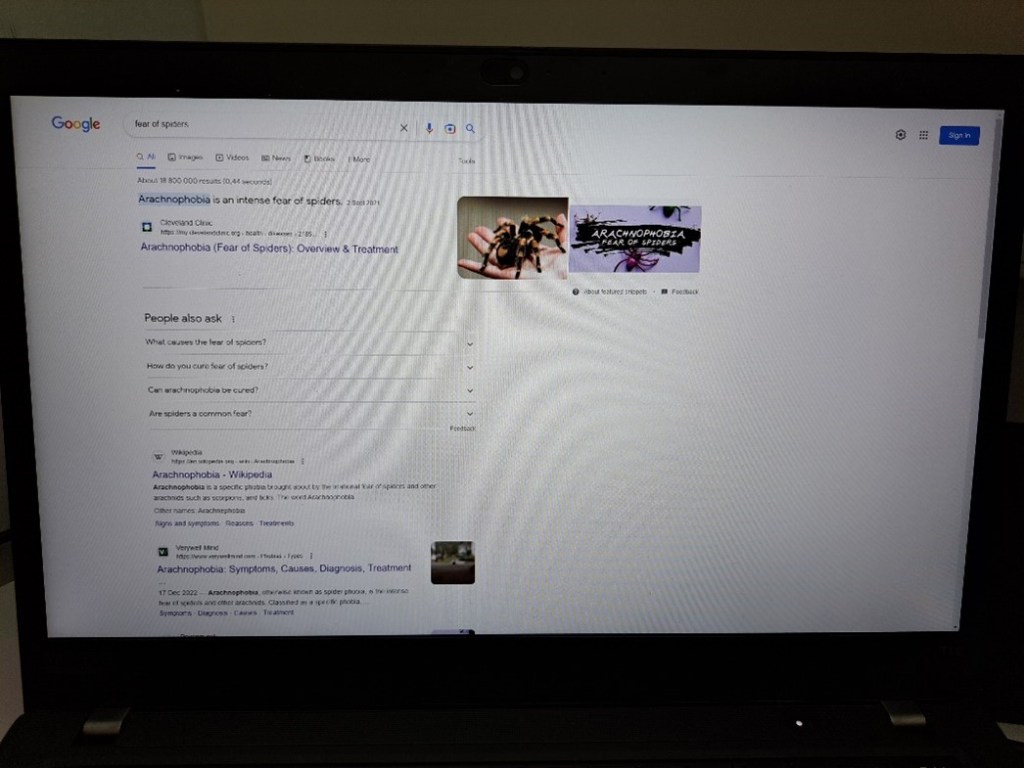
In this study, we explored 25 common biophobias in contemporary societies. We analyzed patterns in space and time using data from worldwide internet searches carried out through Google’s Search Engine. We found that there has been a steady increase in online search volume for biophobias between 2004 and 2022, but with marked differences in the trends of specific biophobias over time (17 biophobias showing positive, 3 negative, and 5 stationary trends). Arachnophobia (fear of spiders) attracted the most interest, followed by Mysophobia (fear of microbes) and Parasitophobia (fear of parasites).
To understand some of the reasons behind these patterns, we further explored the relationship between biophobia search patterns and country-level variables such as the percentage of urban population, urban population growth, incidence of anxiety disorders, and likelihood of encounters with venomous animals. Countries with higher urban populations and urban population growth tended to have higher levels of biophobia searches, as did countries with many venomous species. However, there was little correlation between biophobia search patterns and societal prevalence of anxiety disorders or the likelihood of encountering venomous animals.
Overall, this study provides important insights into the prevalence and drivers of biophobia in modern societies. While our results should be interpreted with caution given the nature and inherent biases associated with internet data, they provide some support to emerging hypotheses about the origins of biophobia in modern urban societies. By understanding these patterns, researchers and policymakers may be better equipped to address the negative consequences of biophobia and promote positive attitudes towards nature and environmental conservation.
 Relational Thinking