Conservation translocations that centre Indigenous peoples and knowledge systems build more resilient biocultural heritage
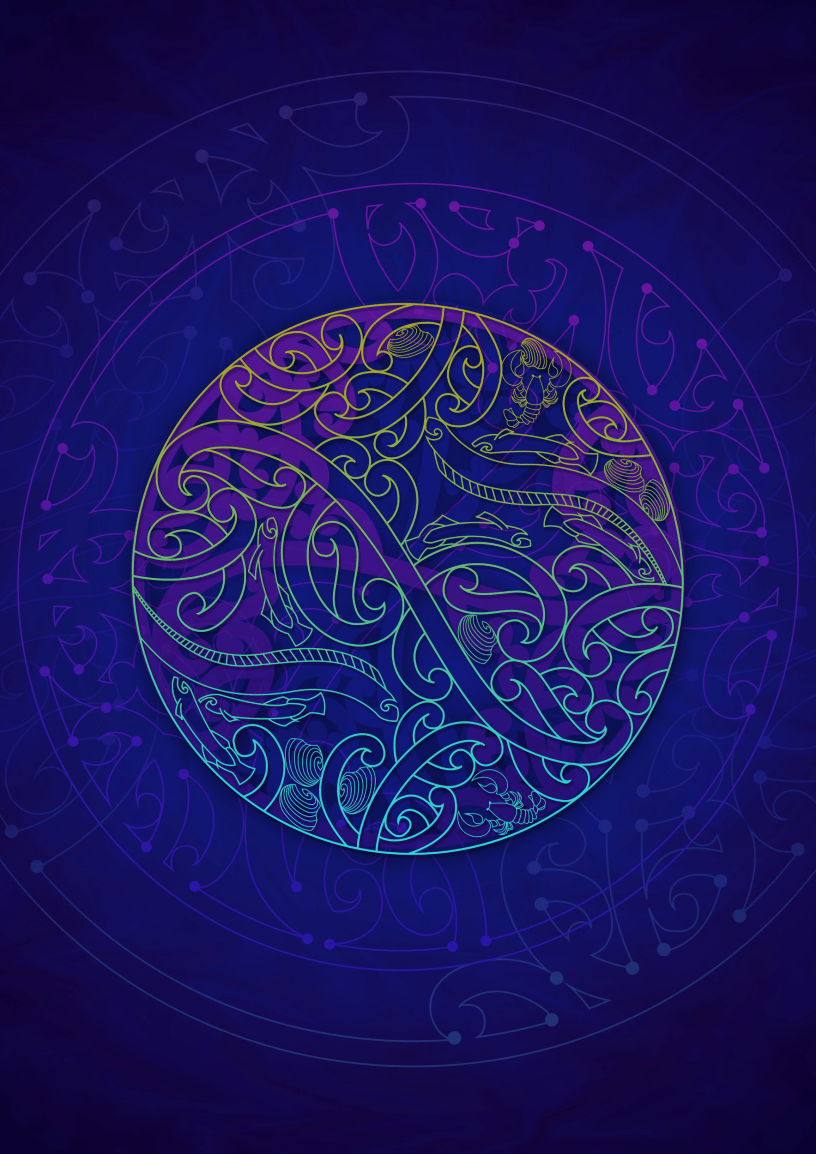
Freshwater conservation translocations under a Kāi Tahu (tribe in Te Waipounamu / the South Island of Aotearoa New Zealand) lens. In this illustration, produced by Kaaterina Kerekere (KEdesign), line art refers to whakapapa (genealogy) and the terminology of whakapapa; while kōwhaiwhai (patterns) symbolise the development, movement and pathways of mātauraka (Māori knowledge systems) and practice. The main design sits within a sphere, reflecting Te Pō, Te Ao Mārama me Te Ao Hurihuri (three layers of the Māori world). In the layers of line work beneath the main illustration, the bold circles represent genetic markers, referring to Western knowledge and practice. These repetitive layered designs depict the weaving together of mātauraka and Western knowledge. Within the sphere are tuna (eel), kōwaro (Canterbury mudfish), kēkēwai (freshwater crayfish) and kākahi (freshwater mussel), representing Aotearoa New Zealand’s freshwater biodiversity; while the colours make reference to relationships between light, land and water. Reproduced with permission.