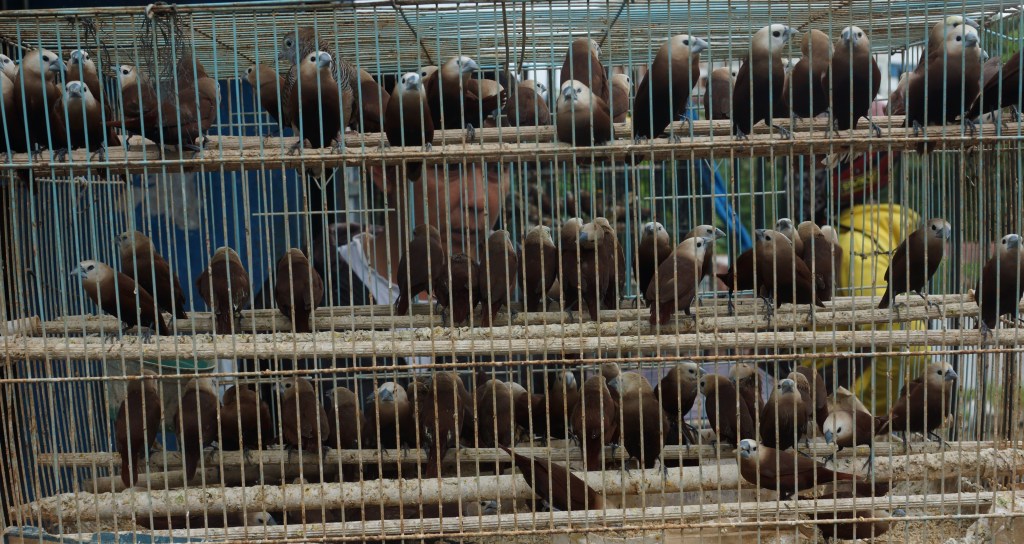
Photograph by Stuart Marsden.
By Harry Marshall, Nigel Collar, Alexander Lees, Andrew Moss, Pramana Yuda, and Stuart Marsden.
There is great concern among conservationists that wildlife trade is seriously affecting populations of a broad range of species. In Indonesia, and particularly on the heavily populated island of Java, the keeping of pet songbirds has long tradition but wild populations of once common birds have been decimated due to the immense volume of birds needed to satiate demand. Reducing demand for wild-caught birds, and especially shifting demand onto commercially bred birds is a potentially valuable tool to make the industry more sustainable.
We used an online survey to find out what sorts of messages might be most likely to change people’s behaviour, and how these messages might be delivered (e.g. social media, local religious leaders). We found a general willingness among people to change their behaviour but we also found that many did not completely understand aspects of the legality of the bird trade. Messages about the harm caused by over-exploitation to wild bird and the future of bird-keeping itself were most persuasive. People also felt a degree of national pride in resolving these negative issues within their country. Messages about bird-keeping being unfashionable, legal concerns, and especially health concerns appeared to be less persuasive. Amateur and professional bird-keepers seemed to respond similarly to messaging, as did different age groups. However, we found that messages might be delivered to different age groups through different media, with young people using social media and trusting scientists more than older cohorts, who preferred more traditional media and better trusted information from faith and community leaders.
 Relational Thinking