By Thomas R. Dando, Sarah L. Crowley, Richard P. Young, Stephen P. Carter, Huw Denman, and Robbie A. McDonald.
Farmers are key stakeholders in conservation, but their views on how conservation should be conducted can sometimes differ from those of conservation organisations. This is especially true of predator reintroductions into farmed landscapes. Understanding farmer perspectives is therefore vital to understand if and how such reintroductions should proceed. This study uses the case study of a proposed European wildcat reintroduction to England and Wales to explore how farmers see this project and their engagement with conservation practices more broadly.
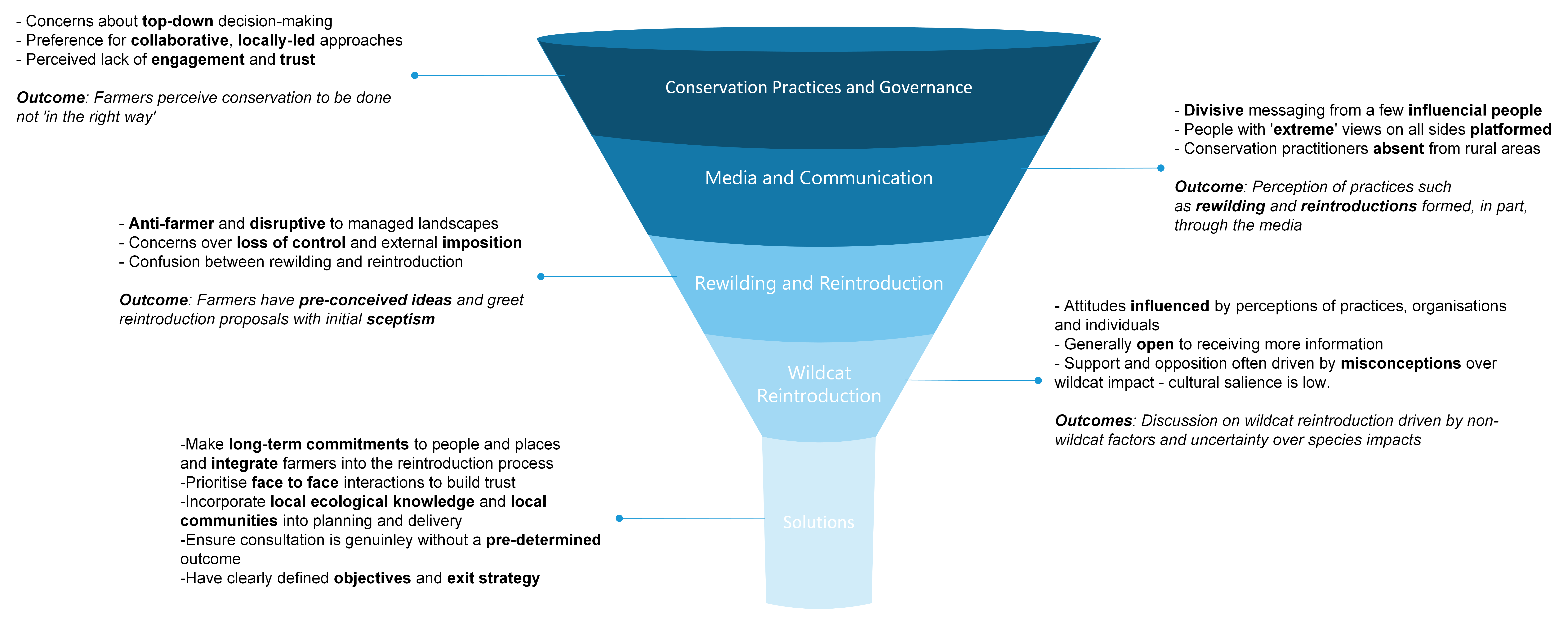
Through interviews with farmers, we found that many feel disconnected from conservation efforts and believe that discussions around rewilding often ignore their needs. Misinformation and media narratives that seem ‘anti-farmer’ have contributed to distrust toward conservation organisations. However, despite these concerns, most farmers were open to discussing reintroduction—provided they were included in decision-making from an early stage. Face-to-face conversations and long-term engagement with trusted individuals were seen as key to building positive relationships.
Because wildcats have been absent from these landscapes for so long, many farmers were unsure about their actual ecological impact. Some overestimated the risks, while others assumed they would bring more benefits than is likely. Confusion between “rewilding” and “species reintroduction” also created resistance. To gain support, conservationists must communicate clearly about project goals and involve farmers in planning.
Our findings suggest that meaningful and participatory engagement at both individual and community levels is essential for improving relationships between farmers and conservationists. These insights can help guide future wildlife conservation projects to ensure they work alongside, rather than against, farming communities.
 Relational Thinking