By Lehlohonolo D. Adams, Grant. D. Martin, Sandy-Lynn Steenhuisen and Colleen T. Downs
This Plain Language Summary is published in advance of the paper discussed. Please check back soon for a link to the full paper.
The economic benefits of invasive alien plants can affect how people manage them. It is, therefore, important to research human perceptions to ensure effective management of invasive alien species and avoid inefficiencies, misunderstandings, and conflicts.
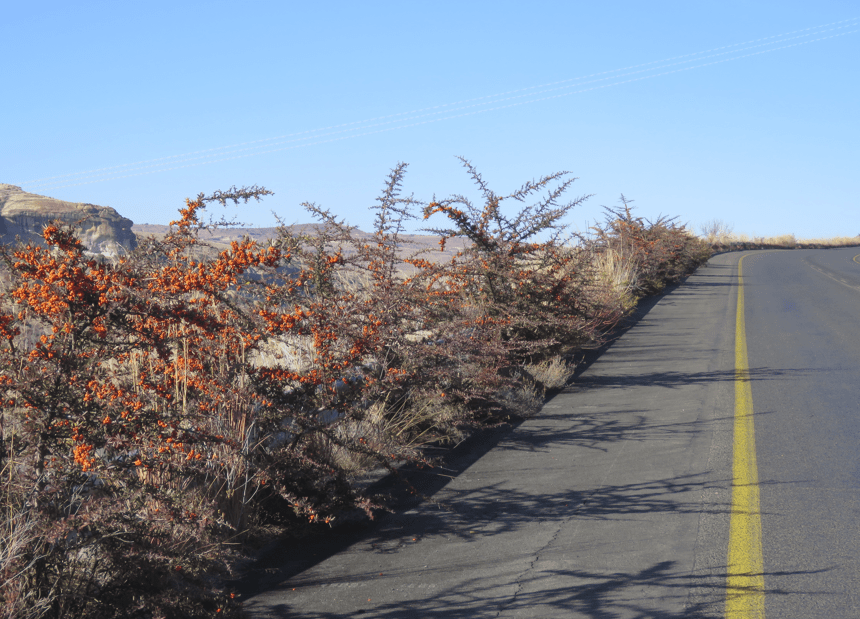
In our study, we aimed to understand community perceptions and interactions with the fleshy-fruited invasive alien shrub Pyracantha angustifolia, commonly called firethorn in South African montane grasslands. We conducted in-person, telephone, and online questionnaires in 2021 and 2022. Managers want to control the species because farmers and conservationists consider the plant a problem. Respondents reported that P. angustifolia reduces grazing and recreational opportunities. Vegetation change was the most frequently reported environmental impact. Further, we learned that although communities occasionally eat the fleshy, orange-red fruits of P. angustifolia, they do not do so for subsistence. Because the plant is not necessary for subsistence, there are likely to be fewer conflicts if managers seek to control the species. Regarding management options, respondents perceived fire as the least effective method. Government assistance in the form of funding and/or initiatives, such as the Expanded Public Works Programme for clearing, was the most desirable assistance the communities would like to receive.
Results from this study provide insight into how communities influence and perceive the invasion of P. angustifolia and its management.
 Relational Thinking