By Xuezhen Ge, Ya Zou, Heather A. Hager, and Jonathan A. Newman
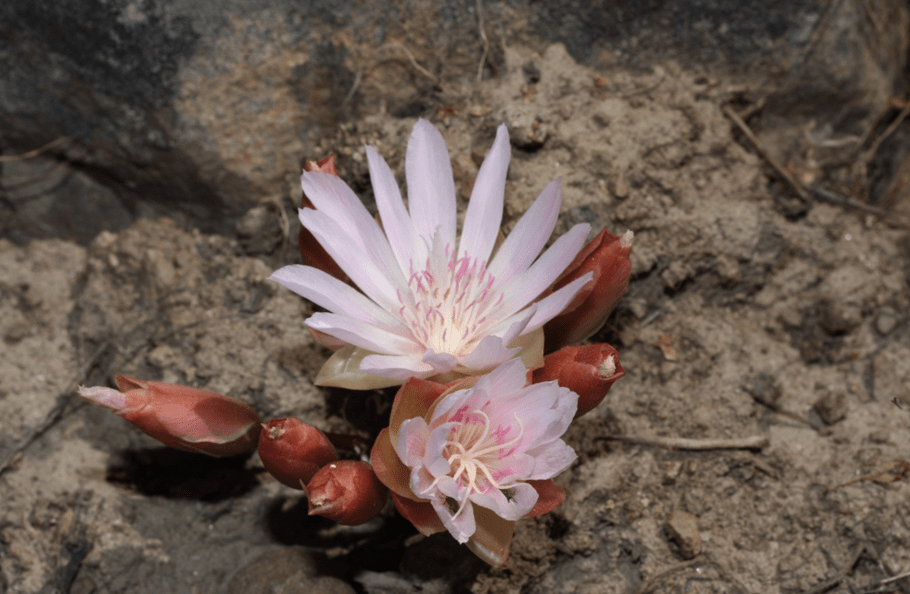
Link: https://commons.wikimedia.org/wiki/File:Lewisia_rediviva_9789.JPG
This Plain Language Summary is published in advance of the paper discussed. Please check back soon for a link to the full paper.
U.S. state flowers and insects are more than just symbols on flags or license plates. These species represent our history, local identity, and reflect deep connections with nature and Indigenous cultures. In this study, we wanted to know if, as the climate continues to change, these beloved natural symbols can actually survive in the states that chose them. If they can no longer live in their home states, where will they go?
To find out, we looked at 64 state flowers and 68 state insects across the United States. Our results show that climate change is a serious threat to many species and the cultural heritage they represent. We found that 30–66% of state flowers and 18–51% of state insects are expected to lose their “habitat suitability”—essentially, their home is becoming less suitable for them to thrive. In fact, we found that ten state flowers and three state insect species will likely face local extinction within their specific states by the end of this century.
While these species might try to find better living conditions elsewhere, they face a difficult journey. We discovered that only three of these state flowers will find new suitable homes right next door to their current states, which makes natural movement very hard. In total, we found that 85% of state flowers and roughly 71–80% of state insects are projected to shift northward and toward higher, cooler elevations as the planet warms.
Ultimately, our research shows that we risk losing not just state species, but the cultural symbols of our state identities. Protecting these species will require forward-looking conservation efforts that account for how climate change is rapidly reshaping the map of where they can survive.
 Relational Thinking
