By Gabriela Marie Garcia, Quetzalcóatl Orozco-Ramírez, Ximena de la Mora Bakjejian, Reyna Domínguez Yescas, Emilio Hernández Martínez, and Patricia Balvanera
This Plain Language Summary is published in advance of the paper discussed. Please check back soon for a link to the full paper.
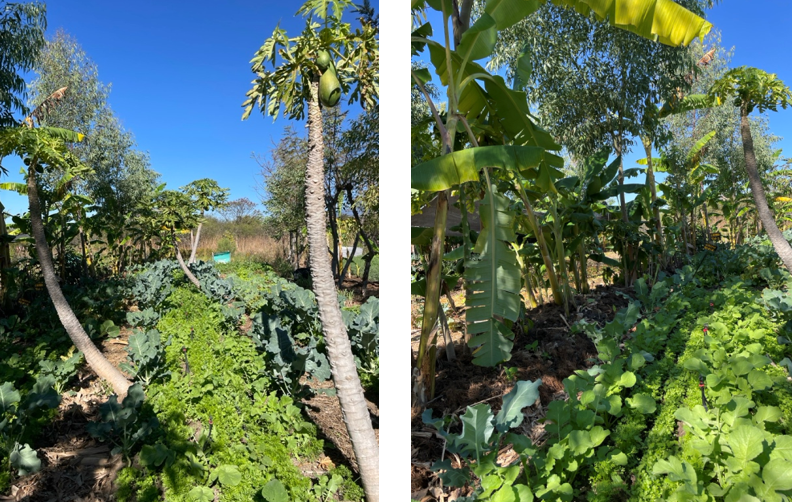
Conventional agriculture typically relies heavily on chemical fertilizers and pesticides and also grows single crops over large swaths of land, known as monoculture. As a result, conventional agriculture threatens the rich variety of plants, animals, and other life that can co-exist with agriculture, soils and water, farming livelihoods, and resilience. Applying ecological principles to agricultural production, known as, agroecological production, offer a promising alternative. But most farmers across the globe are not adopting agroecological practices.
Our research examines how local conditions enable and constrain agroecological production in the Central Valleys of Oaxaca, Mexico, where monoculture production, resource degradation, and farm abandonment threaten farming livelihoods and the relationship between human communities and the rest of the biological community. The participatory research project revealed that strategies should address immediate challenges, such as costs and risks, while fostering long-term enabling conditions, such as women and youth engagement and economic viability. We also highlight the value and broad applicability of our approach for identifying pathways to sustainability that are tailored to local realities.
 Relational Thinking