By Matti Hästbacka, Tatu Leppämäki, Anna Hausmann, Matías Manuel Hernández González, and Tuuli Toivonen
This Plain Language Summary is published in advance of the paper discussed. Please check back soon for a link to the full paper.
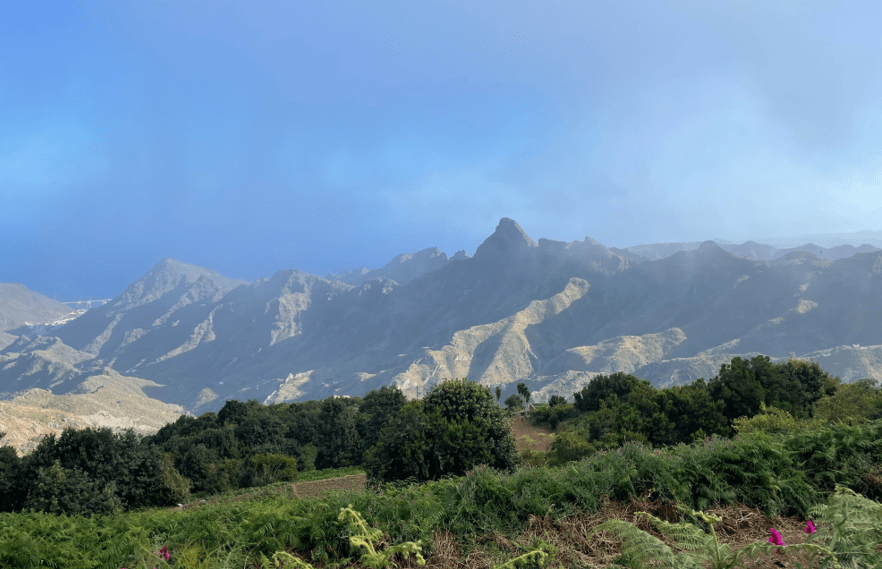
We examined international tourists’ interest in nature in the Canary Islands, a major mass tourism destination and a biodiversity hotspot off the African coast. Our aim was to assess whether visitors engage with nature beyond the beach life that has made the islands famous.
As our primary data source, we used geotagged social media content from Flickr, which researchers widely employ in studies of outdoor recreation and nature-based tourism. The platform provides photographs with GPS coordinates, which makes it possible to analyse their distribution geographically across different land uses. Additionally, we used a computer vision algorithm to automatically analyze the contents of the photographs. Specifically, we investigated whether, and to what extent, tourists visit natural areas outside the main coastal resorts, and what kinds of nature-related contents they post online. Our focus was on the four national parks, 146 protected areas, and areas classified as natural in land-cover data.
The results show that 61.8% of tourists post content from natural areas beyond the beach destinations and urban centres, highlighting both their interest in nature and the resulting pressure on protected and sensitive environments. Content analysis further revealed that 25.9% of the photographs primarily depicted natural elements, although many of these were taken in urban settings. Clear regional differences emerged, with tourists from Germany and Mainland Spain being the most active in visiting natural areas outside the resort zones.
Overall, our findings demonstrate strong interest among visitors in exploring nature beyond the beaches. However, as tourist numbers on the islands continue to rise to alarming levels, the pressure on fragile ecosystems is intensifying. This underscores the urgent need for strategies that guide tourists towards low-impact nature experiences, helping protect habitats and endemic species. Our results provide a basis for targeting such efforts towards the most pressured sites and the traveller groups most inclined to seek out natural areas.
 Relational Thinking