By de Lannoy L, Nasrallah B, Hayhow N, Charles-Rodriguez U, Squires K, Badruddin Z, Lang JJ, Morrison SA, Wang PY, Tremblay MS, and Lee E-Y
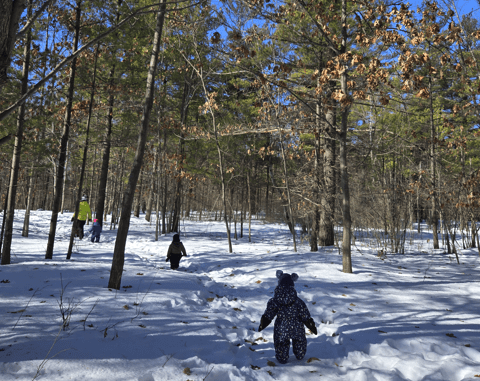
Photo Credit: Forest Explorers Outdoor Early Learning Centre
This Plain Language Summary is published in advance of the paper discussed. Please check back soon for a link to the full paper.
This systematic review looked at how active outdoor play—such as playing, recreating, exploring—relates to people’s sense of connection to nature and their willingness to care for the environment, across all age groups.
Researchers searched five academic databases for studies on this topic and included 51 articles in total. A mix of quantitative and qualitative studies were included. To be included, studies needed to use recognized tools to measure how connected people felt to nature or how likely they were to act as environmental stewards and/or engage in pro-environmental behaviour.
The review found strong evidence from quantitative studies that spending time playing outdoors is linked to feeling more connected to nature and being more likely to care for the environment. Qualitative findings also pointed out that curiosity, fully engaging with nature, feeling a sense of give-and-take, and understanding the complex relationships in nature are important for building this connection at any age.
These findings were combined into a figure that shows how outdoor play can lead to a stronger connection to nature and greater environmental stewardship throughout life.
The researchers recommend that programme planners and policymakers consider these key qualities—such as fostering curiosity and engagement—when designing outdoor play opportunities, to help encourage people of all ages to care for the environment.
 Relational Thinking