In celebration of the shortlisted papers for the Rachel Carson Prize 2025 for Early Career Researchers, we’re delighted to introduce you to some of our shortlisted individuals and papers.
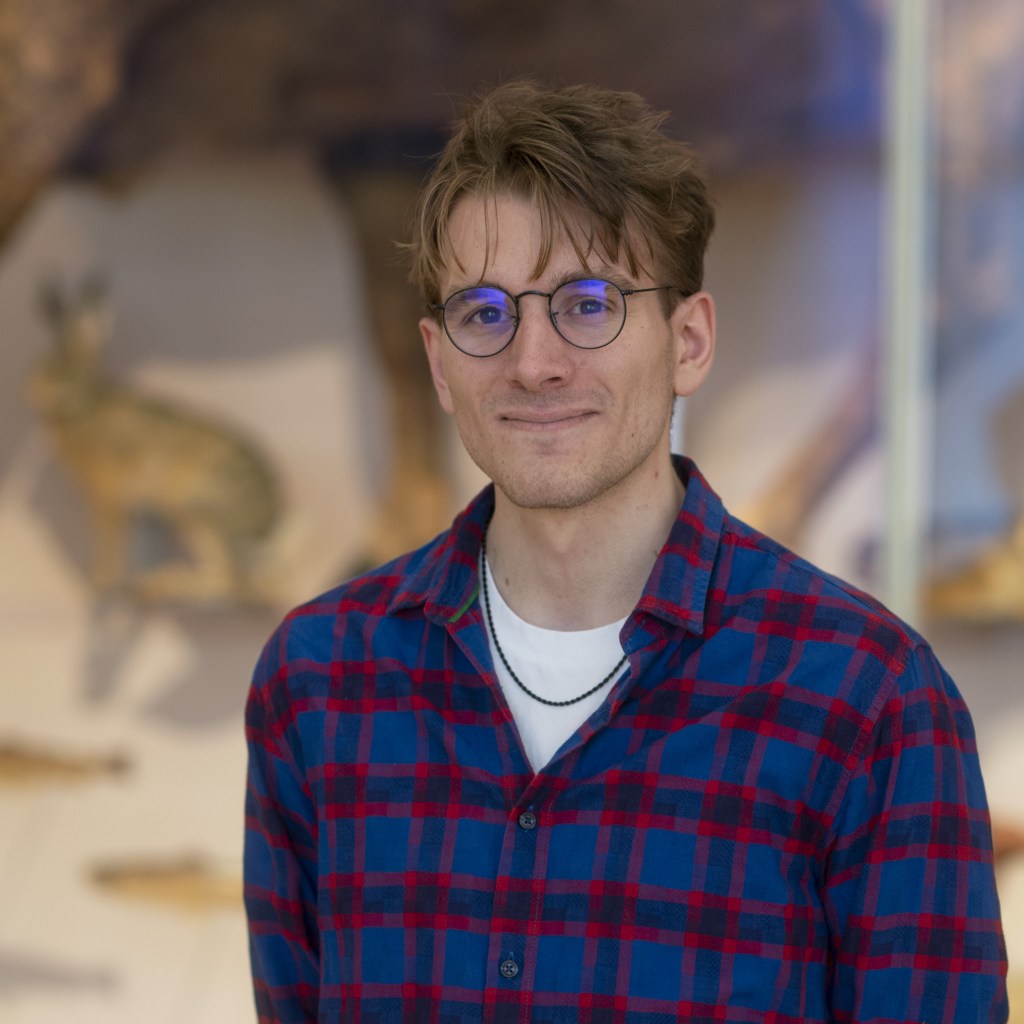
Karl ZELLER (he/him)
Read Karl’s shortlisted paper: ‘Danger versus fear: A key to understanding biophobia‘.
About the paper:
What is your shortlisted paper about, and what are you seeking to answer with your research?
My research explores a simple question: which animals do people fear most, and why? Although fear evolved as an adaptive response to danger, it is likely also influenced by socio-cultural factors. In a time of rapid biodiversity loss and increasing urbanisation, understanding why certain species trigger strong aversion matters, as “unloved” animals often receive less conservation support. Using an immersive online survey with over 17,000 participants worldwide, I ranked 184 species on fear scales. While dangerous animals elicited strong fear responses, harmless species also ranked high, with fear scores varying according to participants’ age and geographical region, suggesting that social-cultural influences significantly shape how we perceive wildlife.
Were you surprised by anything when working on it? Did you have any challenges to overcome?
One surprising finding was the high fear ranking of crocodiles. They are largely absent from the literature on fear, which has focused mainly on snakes and spiders, yet crocodiles were perceived as highly threatening almost everywhere and by everyone in the study. In retrospect this makes sense, as they are genuinely dangerous predators, but their neglect in research highlights how selective our scientific focus can sometimes be. The main challenge was methodological: designing a scientifically rigorous survey that would engage a large and diverse audience. I therefore designed it as an immersive experience, like a narrative game. This storytelling approach helped maintain participants’ attention, notably children.
What is the next step in this field going to be?
Much research on how humans perceive other animals, including my own work, has focused on fear as an adaptive response to ecological threats. However, human emotional responses to animals are rarely unidimensional. People can experience multiple, sometimes conflicting emotions towards the same species. The next step is to explore the broader spectrum of emotions that animals elicit, particularly in children, and across diverse taxa. Investigating how different animal evoke distinct emotional patterns, while considering both ecological factors and socio-cultural influences, would significantly deepen our understanding of human-animal relationships. Identifying taxon-specific emotional profiles would help clarify how biophobia, biophilia, and broader conservation attitudes develop over time.
What are the broader impacts or implications of your research for policy or practice?
The broader implications of this research are perhaps more conceptual than operational. Much of the scientific literature on human-animal relationships has framed animals primarily as ecological threats, with fear positioned as an adaptive response. My work contributes to shifting that framework by showing that fear is not solely determined by ecological danger, but also influenced by socio-cultural factors. Recognising that emotional responses to wildlife are multidimensional and context-dependent may encourage researchers to adopt more integrative approaches, bridging evolutionary perspectives with socio-cultural dimensions. In that sense, the contribution is less about providing direct conservation prescriptions and more about refining the way we study human-nature relationships.
About the author:
What is your current position?
I am currently an associate researcher at the UMR 7206 Éco-Anthropologie lab at the Musée de l’Homme (France) (Muséum national d’Histoire naturelle – CNRS).
Have you continued the research your paper is about?
One step has been to extend the original findings using a face-to-face format. While the online version reached participants worldwide, it required internet access, so in-person studies allow inclusion of people with limited internet access and provides closer observation of reactions. I am also expanding the focus beyond fear to explore a broader range of emotional responses. In particular, I am conducting studies with children in zoo settings, where they express both positive and negative emotions when observing a diversity of species, including animals perceived as dangerous as well as harmless ones; helping us better understand how early experience shape lasting attitudes toward wildlife.
Institutional webpage: https://ecoanthropologie.fr/fr
Read Karl’s shortlisted paper: ‘‘Danger versus fear: A key to understanding biophobia“.
 Relational Thinking