By Marie Francéline Rasoanirina, Georgeta Stoica, Léono Todimazava, Sandra Ranaivomanana, Emma Gibbons, Jamal Mahafina, and Thomas Lamy
This Plain Language Summary is published in advance of the paper discussed. Please check back soon for a link to the full paper.
Fishing is essential for millions of people worldwide, providing both food and income, especially in coastal communities. However, in many regions, fishing is becoming more difficult as marine resources decline. At the same time, limited job opportunities and the impacts of climate change on agriculture are pushing many households to seek new ways to survive.
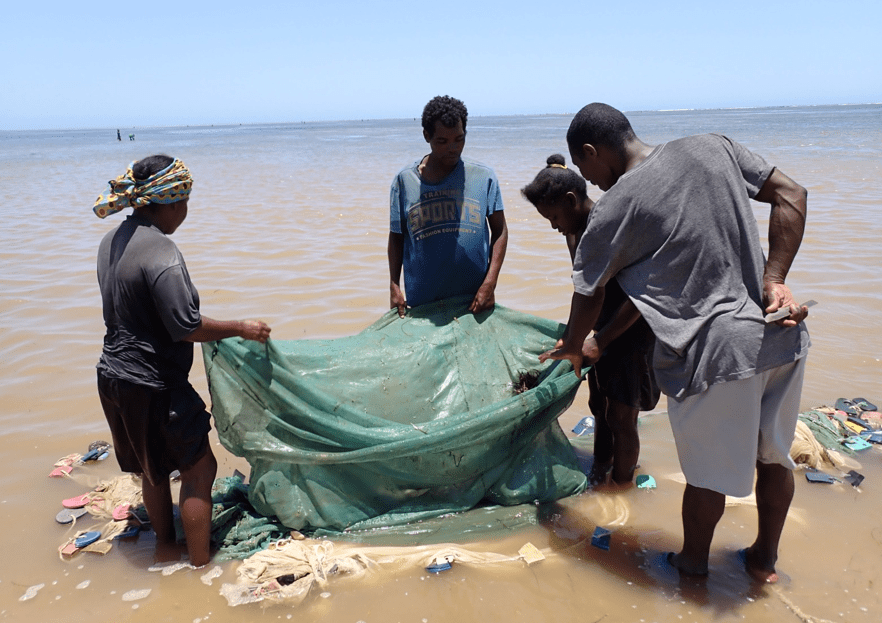
One of these is the use of mosquito nets for fishing. These nets were originally distributed to prevent malaria, but they are now widely used as fishing gear. They are cheap, easy to obtain, and very effective because their fine mesh catches large quantities of small fish. However, this also makes them harmful to marine ecosystems, as they can damage habitats and catch young fish before they have a chance to reproduce. Although this practice is often illegal, it remains widespread. Despite its growing use, mosquito net fishing is still poorly understood, as few studies have looked at its social, economic, and environmental impacts together.
To better understand this issue, we studied mosquito net fishing in Ranobe Bay, in southwestern Madagascar. We combined interviews with fishers, observations of fishing activities, and surveys of fish catches and how they are used and sold. We found that most fishers use mosquito nets because they have few alternatives. Despite social tensions and stigma, this method allows them to catch between 9 and 18 kilograms of fish per trip. A small portion of the catch is kept for food, helping households eat fish regularly, while most is sold in local markets. Women play a central role throughout this process, from fishing to processing and selling, and the income they earn contributes to household decision-making. However, overall earnings remain low. Our results highlight a difficult trade-off. Mosquito net fishing helps people meet immediate needs, but it may also contribute to long-term environmental damage and continued poverty. Without realistic alternatives, this practice can become a trap. Addressing it will require solutions that support livelihoods, recognise the role of women, and promote fair and sustainable use of marine resources.
 Relational Thinking