In celebration of the shortlisted papers for the Rachel Carson Prize 2025 for Early Career Researchers, we’re delighted to introduce you to some of our shortlisted individuals and papers.
KEVIN ROZARIO (They/them)
Read Kevin’s shortlisted paper: ‘Perceived biodiversity: Is what we measure also what we see and hear?‘.
About the paper:
What is your shortlisted paper about, and what are you seeking to answer with your research?
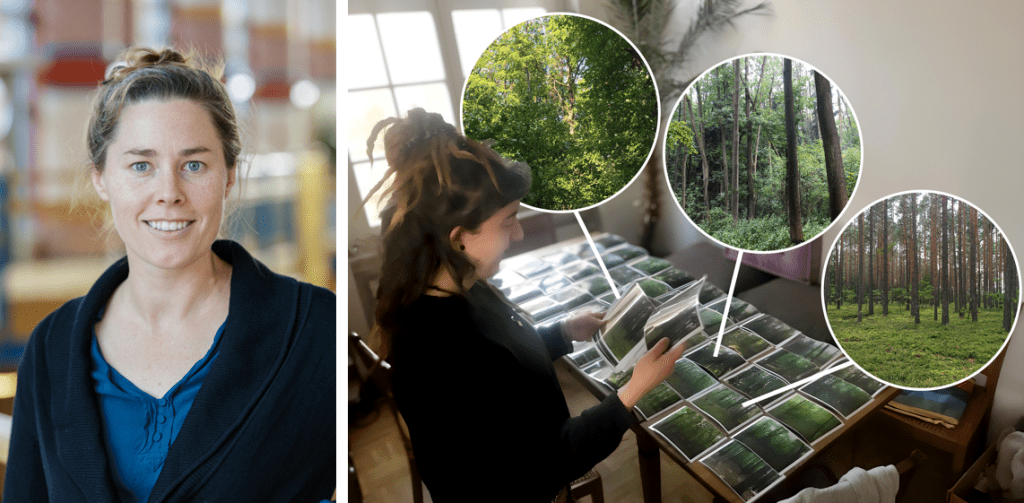
We were interested in finding out more about how people perceive biodiversity with their eyes
and ears – so basically two human sensory pathways. We first researched bottom-up
perception, i.e. what people saw and heard when looking at or listening to different forest
photographs and recordings that varied in biodiversity. Importantly, we did not mention the
word biodiversity at that stage of the experiment to avoid priming our participants for it. In a
second step, participants rated the photos and sound recordings according to biodiversity
(however they defined the term), which allowed us to compare their perceived biodiversity
ratings with the diversity measured by biologists. Lastly, we computed visual and acoustic
diversity indices for the photos and sound recordings to identify indices that potentially bridge
the gap between lay people’s biodiversity perceptions and biodiversity as assessed by
biologists.
Were you surprised by anything when working on it? Did you have any challenges to overcome?
To us, the biggest surprise was how accurately people perceived biodiversity. Previous studies –
also from our lab – mostly found low to moderate associations between actual and perceived
biodiversity, while in the present study, we found very strong relationships for both the visual
and the acoustic sense. We assume that this is a result of the various photographs and sound
files that the participants could compare. People may thus perceive biodiversity quite
accurately, as soon as they have multiple examples to compare.
What is the next step in this field going to be?
We focused on forest ecosystems and the visual and acoustic senses only. Future research
may therefore look at biodiversity perceptions of marine ecosystems such as the coral reefs, or
other terrestrial habitats such as meadows, arable land or urban green spaces. At the same
time perception is, of course, not limited to vision and hearing. Even though these two senses
are arguably the most dominant sensory systems, investigating how biodiversity feels
haptically, how it smells and tastes and how all five senses together determine what is
ultimately perceived is also very relevant.
What are the broader impacts or implications of your research for policy or practice?
Perceived biodiversity has been shown to promote mental health and wellbeing, while there is
also evidence suggesting that nature-induced wellbeing gains strengthen pro-environmental
behaviours. A better understanding of what people actually perceive and what evades their
attention could inform environmental management to achieve co-benefits for the wellbeing of
people and biodiversity conservation. We also see potential in using our findings to strengthen
nature connection in people. Forest bathing, a nature-based health intervention that is
characterised by engaging all senses could benefit from guides making sure to integrate some
of the identified forest characteristics from our work to increase environmental awareness in
participants.
About the author:
How did you get involved in ecology?
Kevin: I grew up in the beautiful Swabian Alps in the south of Germany, surrounded by forests.
My childhood was characterised by playing outside with friends, building camps in the woods.
Nature therefore has always played a central role in my life. During my studies in psychology, I
felt I needed to find something to combine the things that mattered to me the most: people AND
nature .. and well: here I am.
Taylor: I got involved in ecology first by working at the National Geographic Society. I was quite
inspired by the conservation work they fund, so eventually left to work abroad and see what
conservation looks like on the ground, which led me to ecology
What is your current position?
Kevin: I currently work as a PhD student in the Biodiversity and People lab at the German Centre
for integrative Biodiversity Research. My main research emphases are biodiversity – people
interactions and how people connect with nature, also from a spiritual viewpoint. I also recently
started my training in psychotherapy.
Taylor: My current position is Conservation Scientist at the Endangered Landscapes and
Seascapes Programme; I work on the science and monitoring of large-scale restoration
projects across Europe.
Have you continued the research your paper is about?
Kevin: As my PhD project is about forest biodiversity – mental health linkages, perceived
biodiversity played a pivotal role in all of the studies we have conducted so far. The experiments
from the shortlisted paper originally served as a pilot to inform the other studies we had
planned at the beginning of my PhD journey. We have created new items to e.g. assess people’s
perception of forest colours or vegetation density based on the picture sorting study. These
items were then tested for their wellbeing effects in two intervention studies, one of which
Taylor was also involved in. In addition, a master student in our lab has just started their work to
quantify the importance of these items for perceived biodiversity, which will be an important
add on to the qualitative analyses presented in the shortlisted. So yes, there is more to come!
What one piece of advice would you give to someone in your field?
Collaborations are key! Working with others is easier, much more fun, and produces
much more interesting pieces of work!
Read Kevin’s shortlisted paper: ‘Perceived biodiversity: Is what we measure also what we see and hear?‘.
 Relational Thinking