By Roxana Rojas-VeraPinto, Rubén Bernardo-Madrid, and Manuela González-Suarez
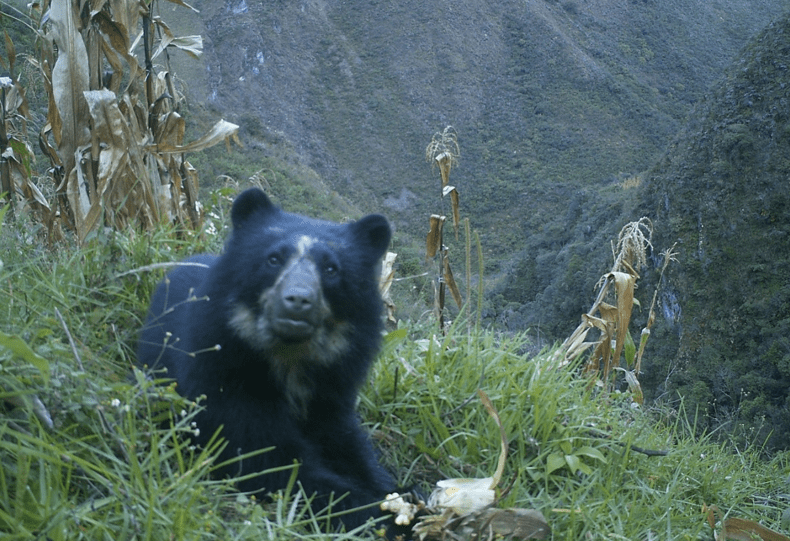
The only bear species in South America, the Andean bear (Tremarctos ornatus), is facing extinction due to habitat loss and illegal killing. People mostly illegally kill the Andean bear after negative interactions between people and bears or bears and people’s resources. Both habitat loss and illegal killings are increasing as human populations increase, develop more industry, plant more crops and farm more livestock. Knowing where, when, and what types of human-Andean bear interactions (HABI) occur is fundamental to improve our understanding for developing better coexistence practices.
Our study summarizes the existing HABI knowledge with a systematic review of HABI-reported events across the whole Andean bear range since 1980. We gathered information from various published sources, including scientific articles and grey literature in both English and Spanish, looking for HABI reports and for Andean bear conservation plans. We found 96 documents reporting 1,110 HABI events across all five countries where the Andean bear occurs, but covering only 11% of the species’ distribution range. Half of the documents were grey literature (for example, theses, reports) published in Spanish. The main methods people applied to collect HABI information were interviews and surveys (83% of documents). Fewer studies (29%) reported direct observations and field inspections, either exclusively or to complement the main methods. Most reported HABI events were associated with negative impacts that can lead to conflict: the two most frequently reported types were bears killing cows and damaging maize. Unlike what other species, attacks on humans and bear-vehicle collisions were extremely rare. Our review identified gaps in geographic coverage and detail in the data. Approximately 2/3 of documents did not include key information such as geographic coordinates or dates for the reported events. Seventeen conservation plans have proposed diverse mitigation actions but rarely provided evidence of their effectiveness.
Our work highlights the limited and heterogeneous information available on HABI across South America, which hinders understanding and our capacity to anticipate potential interactions and conflicts. We propose strategies to encourage reporting, standardize data collection and improve data accessibility that can enhance data coverage and quality. These steps are required to strengthen our understanding of HABI and robustly support decision-making to promote coexistence.
 Relational Thinking