In celebration of the shortlisted papers for the Rachel Carson Prize 2025 for Early Career Researchers, we’re delighted to introduce you to some of our shortlisted individuals and papers.
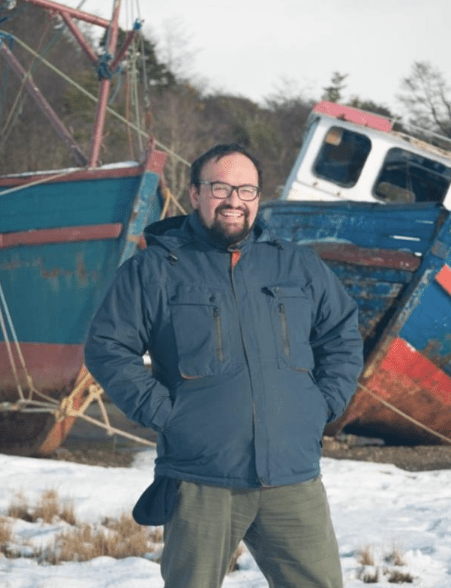
JAIME OJEDA (He/him)
Read Jaime’s shortlisted papers
‘Reciprocal contributions in marine Indigenous stewardship: The case of Haida abalone gathering‘
and
About the paper:
What is your shortlisted paper about, and what are you seeking to answer with your research?
Overview for both papers — A central aim of our work has been to unpack the complexity of reciprocity as an emergent value in relationships between people and nature: a value that can flourish across diverse marine and cultural contexts, from a bi-hemispheric perspective. Across both papers, we show that reciprocity is neither binary nor uniform; rather, it unfolds along a gradient of practices, meanings, and responsibilities that take different forms in different places. To explore this gradient, we use the concept of reciprocal contributions to combine and contrast multiple tools—from social-science approaches to ecological methods.
Paper 1 | Haida abalone gathering — This paper emerged from a collaboration with the Council of the Haida Nation to understand reciprocal contributions between Haida people and northern abalone, and how these efforts have been sustained for nearly 40 years of recovery following the collapse driven by commercial fishing and colonial mismanagement. The central idea was to examine how Haida values—particularly reciprocity (Isda ad diigii isda)— have guided concrete practices of care, monitoring, and management. Through interviews with Elders, we reconstruct a history of sustained stewardship and consider possible futures for Haida abalone management. In doing so, we highlight the early importance of the Watchmen and Guardians programs for the continuity of Indigenous management. Elders also emphasized that future stewardship should bring together ecological science and Indigenous knowledge. Cultural guidelines such as “take only what you need to eat,” revitalizing abalone harvesting, and maintaining ceremonial practices—linked to potlatches and moments of loss when Elders pass away—emerge as key directions for the future.
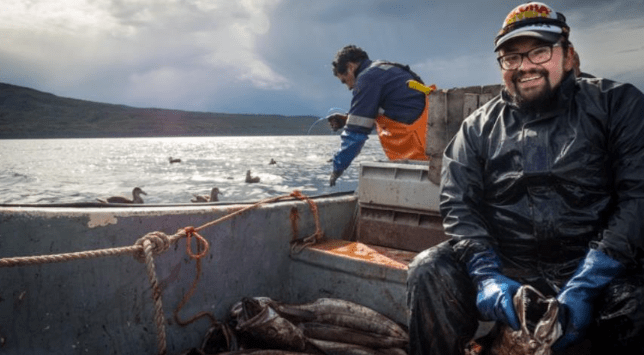
Paper 2 | Two lenses — In this paper, we explore relationships between artisanal hake fishers and seabirds (albatrosses and petrels) in the sub-Antarctic channels of Chilean Patagonia. Our key goal was to understand which values emerge from everyday coexistence at sea and how reciprocity can take shape in interactions between people and marine nature. Fishers target hake, while seabirds follow small boats to feed on fish offal; however, the relationship cannot be reduced to trophic dynamics alone—there are other angles to this interaction. We therefore used two complementary methodological lenses. We drew on social-science tools such as interviews and participant observation. Since we cannot ‘interview’ albatrosses in any straightforward way, behavioural ecology and field experiments offered a way to probe one tip of the iceberg—capturing reciprocal contributions such as trophic subsidies, information and learning cues that support fishing, and family memories that seabirds can evoke. The work unfolds against a backdrop of fisheries decline and an ageing fishing workforce.
Were you surprised by anything when working on it? Did you have any challenges to overcome?
Paper 1 | Haida abalone gathering — On a personal level, as a Latin American PhD student, I will always be grateful for how the Haida Nation welcomed me on Haida Gwaii. One challenge was navigating my Latin-accented English, especially at the start of interviews with Haida Elders. We always met with a young Haida biologist from the community, and Elders quickly recognized I was not from Canada and asked where I came from. When I told them Patagonia—at a similar latitude, but in the Southern Hemisphere—it opened beautiful conversations. We found ourselves sharing memories and ways of knowing that resonated across both places, and those exchanges became an unexpected and meaningful part of the research.
Paper 2 | Two lenses — The biggest challenge was the weather. Working in the sub-Antarctic channels means that conditions can change fast, and being on a 7-metre boat when a sudden Patagonian windstorm hits is always demanding. While the fishers and I were bracing against the waves and trying to keep working safely, seabirds—especially black-browed albatrosses—often seemed to appear more frequently, right in their element. So the climate was not so much a surprise as a constant test at these latitudes: it shapes both fishing and the realities of doing socio-ecological fieldwork at sea.
What is the next step in this field going to be?
Paper 1 | Haida abalone gathering — My time on Haida Gwaii opened a network of possibilities and connections with other Indigenous communities and First Nations researchers. One future direction we are actively pursuing is creating meaningful links among Indigenous communities and leaders—especially women connected to fishing—across territories in both the Southern and Northern Hemispheres. These connections are not easy: funding, language, and time are constant constraints. But they are deeply worthwhile, because they create space for people to meet, share lived experience, and learn from one another’s stewardship pathways in ways that research alone cannot achieve.
Paper 2 | Two lenses — A year and a half ago, I finished my PhD in Canada, and now I am working as an early-career researcher at Magallanes University in Patagonia with a clear goal: to contribute to and help mobilize knowledge about reciprocal contributions between people and nature. For me, the next step in this field is to make values like reciprocity more visible—and more actionable—in decision-making, from community processes to public policy. I am also increasingly focused on the tensions and conflicts that can block these valuations from shaping real outcomes. This is especially pressing in Chilean fisheries, where neoliberal governance structures often make change difficult and constrain adaptive, learning-oriented management.
What are the broader impacts or implications of your research for policy or practice?
Paper 1 | Haida abalone gathering — This research reinforced, for me, that reciprocity is not a cultural aspect—it is also a management asset. Policies that ignore it risk missing what has sustained stewardship for generations. Our findings point to practical implications: rebuilding abalone governance around Haida values and concrete actions (monitoring, restoration, intergenerational teaching), with guidelines like “take only what you need to eat” treated as real management principles. The work also shows why supporting Indigenous institutions matters: programs such as the Haida Gwaii Watchmen and Guardians create long-term, place-based capacity for marine governance and recovery.
Paper 2 | Two lenses — For me, the wider implication is that fisheries policy can be stronger when it recognizes not only stock status and economics, but also the values that shape everyday practice at sea—like reciprocity. In Patagonia, many fishers already see “doing things the right way” as part of responsible fishing, including practical steps that reduce seabird bycatch (e.g., increasing line sink rates and actively keeping birds away from hooks). Our work suggests that supporting artisanal fisheries through local markets and institutional purchasing (e.g., schools, hospitals) could help sustain livelihoods, biocultural continuity, and the relationships people value.
About the author:
How did you get involved in ecology?
My path into marine ecology is rooted in family stories. My grandmother is from Chiloé Island, a place where fishing traditions, cuisine, and oral stories are deeply woven together through Indigenous and mestizo worldviews. The stories I heard as a child shaped how I came to see seascapes as cultural and ecological at once. My father has also been a fisher, and his experiences kept me attentive to changes in both culture and policy. Professionally, I’m fascinated by seabirds and their natural history—and I love diving (flying, but underwater), which led to my connection with abalone in kelp forests. Today, I’m driven to understand values like reciprocity in human–nature relations.
What is your current position?
After completing my PhD at the University of Victoria, I am currently an early-career researcher at the Cape Horn International Center (CHIC–UMAG) and an Assistant Professor at the University of Magallanes, based in the Magallanes Region of Chilean Patagonia.
Have you continued the research your paper is about?
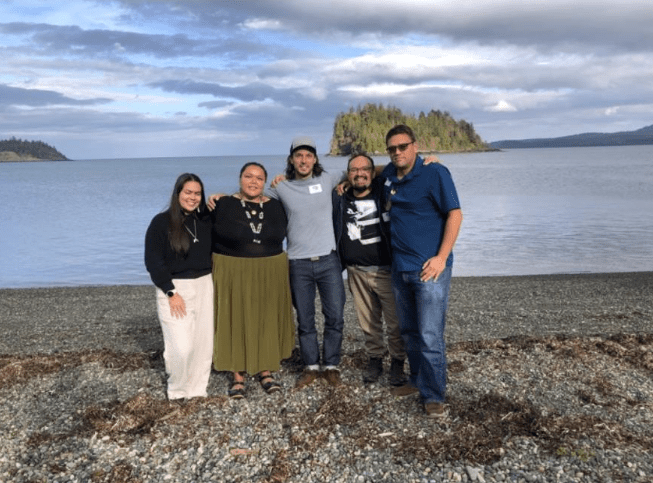
Paper 1 | Haida abalone gathering — Yes. After the paper was published and I was back in Patagonia, the Council of the Haida Nation invited me to return to Haida Gwaii for an Abalone Summit—a gathering of Indigenous leaders and scholars from the west coast of Canada and the United States focused on sharing and advancing good practices for abalone stewardship. It was also a chance to return our findings directly to the Elders and community members we interviewed. Coming back to Haida Gwaii from Patagonia felt like a beautiful reunion for our whole team, and it helped strengthen an ongoing network connecting fishing and stewardship communities across different latitudes.
Paper 2 | Two lenses — Yes. Since returning to Chilean Patagonia, I’ve continued working with artisanal hake fishers, focusing on two practical fronts. First, I’m documenting and making visible the tensions and conflicts driving the fishery’s decline—especially restrictive management policies such as individual fishing quotas. Second, I’m working to strengthen local seafood markets so the remaining hake fishers are better valued and can sustain their livelihoods.
What one piece of advice would you give to someone in your field?
I think doing socio-ecological research means taking values seriously, how people relate to nature, while also understanding the tensions and conflicts that surround those values. One thing I learned from fieldwork is that many conflicts have deep historical roots, and communities may have been working toward solutions for years. When possible, I encourage combining social and ecological methods: they can create useful synergies and offer different angles on the biocultural phenomena we study. An ethical approach is essential, often grounded in genuine partnership with Indigenous and fishing communities. Be patient, progress rarely depends on research alone; it is also shaped by political processes at multiple scales. Research can help change fisheries policy and practice, but it requires patience, learning to sit with frustration, and a commitment to hope.
Read Jaime’s shortlisted papers:
‘Reciprocal contributions in marine Indigenous stewardship: The case of Haida abalone gathering‘
and
 Relational Thinking