In celebration of the shortlisted papers for the Rachel Carson Prize 2025 for Early Career Researchers, we’re delighted to introduce you to some of our shortlisted individuals and papers.
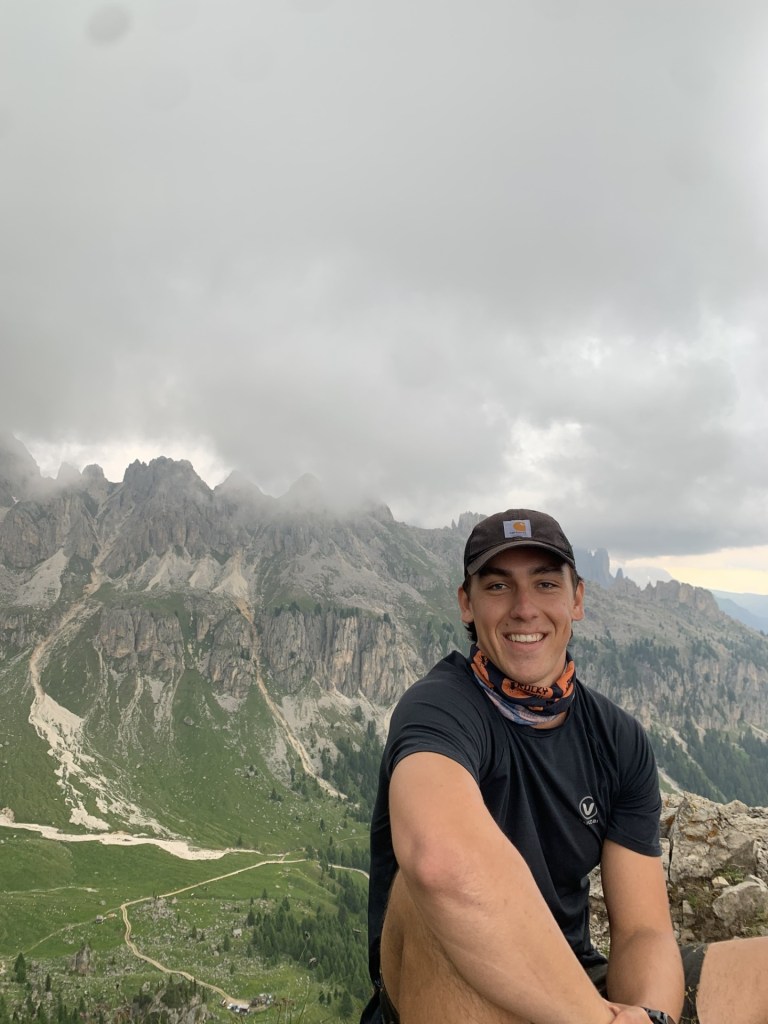
OSCAR JONES (He/him)
Read Oscar’s shortlisted paper: ‘Carbon and corms: Introduced ungulates and saltwater intrusion variably impact coastal floodplain ecosystem services in the Laynhapuy Indigenous Protected Area, northern Australia‘.
About the paper:
What is your shortlisted paper about, and what are you seeking to answer with your research?
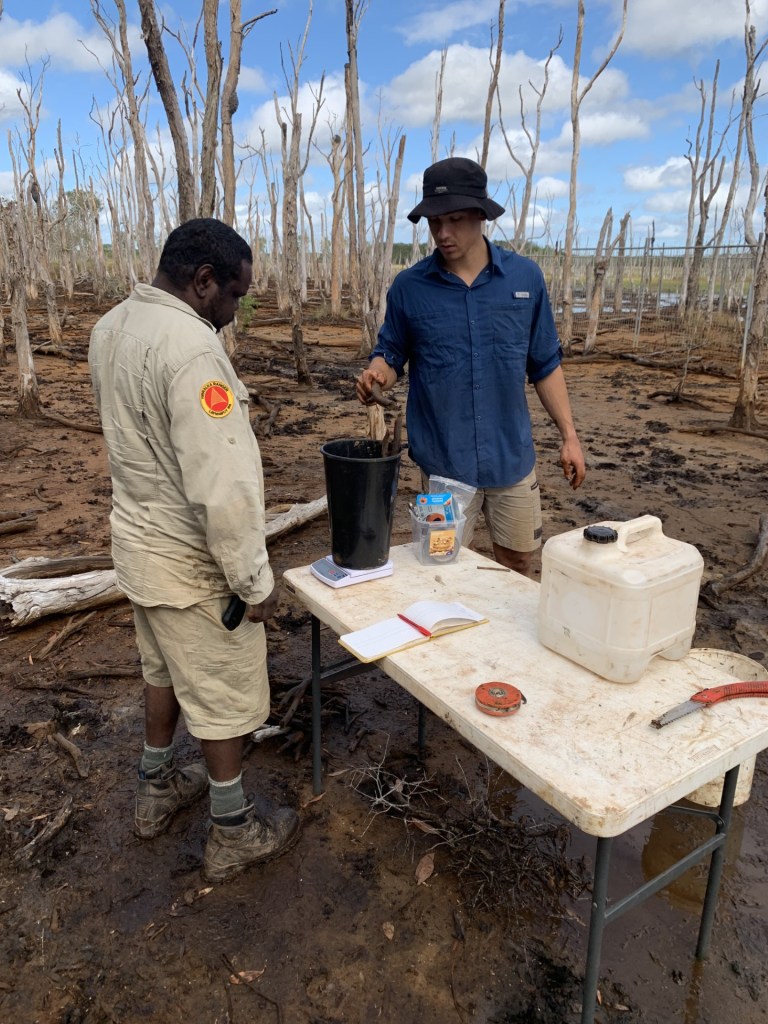
Our paper, Carbon and corms: Introduced ungulates and saltwater intrusion variably impact coastal floodplain ecosystem services in Laynhapuy Indigenous Protected Area, northern Australia investigated through a collaborative approach, what the interactive effect of two introduced ungulate species, the water buffalo (Bubalis bubalis) and wild pigs (Sus scrofa), as well as saltwater intrusion, were having on the above-ground carbon dynamics and bush food values of floodplain fringe vegetation on Gurrumuru floodplain in northern Australia. In collaboration with Yolŋu Yirralka Rangers, and members of the Gurrumuru Homeland community, we aimed to answer these questions through a mixed-method, multiple evidence-based approach. We conducted interviews with Traditional Owners to understand the impacts of these threats on floodplain cultural values, and combined this with field surveys using an elevation-stratified introduced ungulate exclusion plot array to evaluate how aboveground carbon stocks in fringing forests varied between sites excluding and exposed to ungulate activity and varying degrees of saltwater stress, as well as how räkay (Eleocharis dulcis) bush food values differed between excluded and exposed plots.
Were you surprised by anything when working on it? Did you have any challenges to overcome?
One result we were most surprised about was the sheer impact wild pig predation had on the räkay corm harvest yields. Similar to other observations and reports of pig predation on other culturally important species in northern Australia, pigs dramatically reduce the number of corms present in the räkay sedgelands, and made these places rather unappealing for the women (miyalk) to harvest corms in. This project was the first research project I have led, and whilst I had great supervision and guidance from my research team and Yolŋu collaborators, research, especially remote field work, can be a challenging task where not everything goes the way you anticipated. Giving room to be adaptable and making compromises when necessary was really important.
What are the broader impacts or implications of your research for policy or practice?
Whilst there is national recognition that feral ungulates pose a significant threat to coastal floodplains and wetlands, funding to manage populations across the region is sporadic and spatially varied. Increasingly, efforts are being undertaken to develop carbon abatement methods that should sit under Australia’s Emission Reduction Fund and Nature Repair Markets. This project contributed to a considerable body of research attempting to provide strong evidence to support this program, but also highlighted the need to integrate local governance and locally meaningful indicators of wetland recovery to develop value-inclusive market mechanisms.
About the author:
How did you get involved in ecology?
Since I was a kid, I have always been interested in the natural environment. It all started when I was a kid, adventuring through the Great Otway National Park and being star-struck by the world’s tallest flowering plant, the Australian Mountain Ash (Eucalyptus regnans). Once I finished high school, I completed a Bachelor of Conservation Biology and a Master of Research at Macquarie University, Sydney. I took every opportunity I could, for better and worse, during my studies, conducting field surveys to track Southern Brown Bandicoots, working out in remote western New South Wales, volunteering at one of Australia’s largest feral predator-free sites with the Australian Wildlife Conservancy, to insurance breeding programs for Tasmanian Devils in the Barrington Tops. The work I completed during my Master of Research, however, in northeast Arnhem Land cemented my decision that environmental management and conservation is where I belong.
What is your current position?
Following my Master’s, I moved to Perth, Western Australia, where I am now halfway through completing my PhD within the Australian Research Council Training Centre for Healing Country. My research focuses on evaluating the use of seed enhancement technology on native seed to optimise seed delivery in native production nurseries and for direct seeding in large-scale restoration projects being conducted across southwest Western Australia.
Have you continued the research your paper is about?
I am still collaborating with my previous supervisor, Associate Professor Emilie Ens, and her team on work we completed during my time in Sydney, but not much other than that. The team behind the proposed feral-ungulate method is composed of a national network of academic researchers, industry representatives, Traditional Owner organisations and government agencies, and is doing amazing work progressing this project to a state where it can be implemented on-ground.
What one piece of advice would you give to someone in your field?
Something I have become increasingly aware of, both from this project up in northeast Arnhem Land working with Traditional Owners, and my current PhD work, collaborating with farmers and others involved in the primary production sector, is that in collaborative projects, leave your academic bias at the door. It is fundamental to listen and take on differing perspectives, and to allow the research and its application to be steered by them. Research is only useful to those on the ground when it fits into their context and genuinely aims to tackle challenges that collaborators see as needing to be dealt with. I genuinely thank one of my mentors, Assoc Prof Emilie Ens, for opening my eyes to what genuine collaboration looks like.
Read Oscar’s shortlisted paper: ‘Carbon and corms: Introduced ungulates and saltwater intrusion variably impact coastal floodplain ecosystem services in the Laynhapuy Indigenous Protected Area, northern Australia‘.
 Relational Thinking