By Antonio Romano, Elisa Storace, Diego Ronchi, and Elisa Dalla Longa
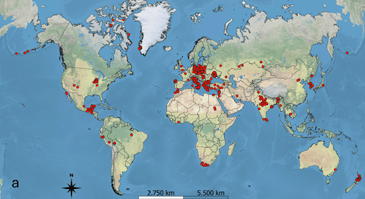
People usually value archaeological sites for their history and cultural meaning. Our research shows that they also matter for another reason: many archaeological sites quietly support wildlife. Across the world, they are not only traces of past societies but also places where plants and animals find space to survive in today’s human-dominated landscapes.
To explore how archaeological sites support plants and animals, we reviewed 241 scientific studies that documented biodiversity in archaeological sites. Together, these studies covered 1412 sites on almost every continent. Many of these places have been left relatively unchanged for long periods of time. This limited modern disturbance allows nature to persist, even when archaeological sites are surrounded by cities, roads, or intensive agriculture. Most studies focus on plants, especially flowering species that grow on stone walls, open ground, and among ruins. Scientists study animals less often, but reptiles, bats, birds, and small mammals regularly use archaeological structures as shelters, nesting areas, or feeding sites. In several cases, these sites host rare species that no longer occur in the surrounding landscape, highlighting their importance for conservation. We also examined the presence of human-introduced non-native species. About one third of the studies mentioned these species, but only a small number provided clear measurements. Where numbers were available, non-native species represented, on average, 15% of the species found at a site, and in some cases over 40%.
This shows that archaeological sites can have a dual role: they can protect native biodiversity, but they can also become places where non-native species establish, particularly in urban or disturbed settings. Taken together, our findings suggest that archaeologists should manage sites as both cultural heritage and living ecosystems. Recognising this dual role can support better decisions about tourism, vegetation management, and long-term conservation, helping protect the past while sustaining nature today.
 Relational Thinking