By Ashraf Shaikh and Kulbhushansingh Suryawanshi
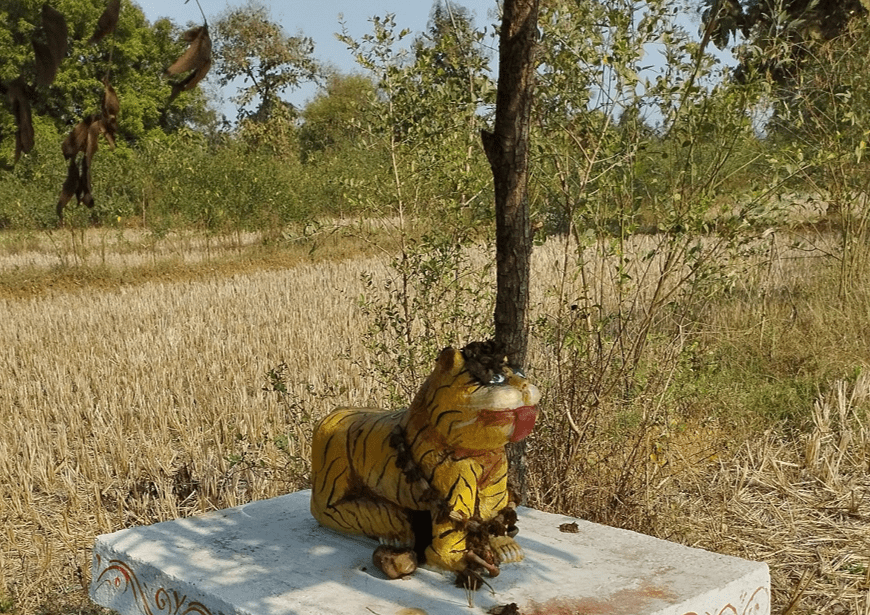
People often celebrate large carnivores, like tigers, as conservation success stories. But when large carnivores live close to people, especially in crowded rural landscapes, communities do not share the risks and costs equally. In this study, we looked at what it really means to “live with tigers” for people who face very different levels of danger within the same villages.
Our research took place in the buffer zone of Tadoba-Andhari Tiger Reserve in central India, an area with one of the highest tiger densities in the world. We compared households with neighbours who had directly experienced tiger attacks and households that had not. Because these households are in the same villages, they share the same forests, conservation rules, and government policies. This allowed us to ask a simple but important question: if the setting is the same, why do experiences of coexistence differ?
We reviewed government records of tiger attacks over ten years and conducted in-depth interviews with 50 residents across 16 villages. We found that most people, whether they had experienced an attack or not, expressed similar beliefs about tigers. Many accepted their presence, recognised their ecological importance, and felt that people must adjust their lives in protected landscapes.
However, everyday life looked very different for households that had experienced attacks. These families described constant fear, repeated encounters, limits on when and where they could work, and long-term disruptions to livelihoods. By contrast, households without direct experience of attacks often saw coexistence as something that required caution, but not constant sacrifice.
Our main conclusion is that coexistence in Tadoba is not something people freely choose. It is a condition that some households are forced to endure more than others. Conservation can appear successful at a broad scale, while quietly relying on the repeated suffering of a few groups. Recognising these hidden inequalities is essential if coexistence is to be fair, effective, and truly sustainable.
 Relational Thinking