By Lori Cyprien, Sebastien Fekete, Susan M. Leech, Brian Fung, Anne Hervieux, Chris Wagner, and Kalene Gould
This Plain Language Summary is published in advance of the paper discussed. Please check back soon for a link to the full paper.
For thousands of years, Indigenous Peoples in northern Alberta, Canada, including Dené and Cree from the Athabasca Chipewyan and Mikisew Cree First Nations, have cared for our homelands by using our laws and stewardship principles. Since signing Treaty 8 with the Canadian Government in 1899, policies and practices of this government have damaged our values and ways of life.
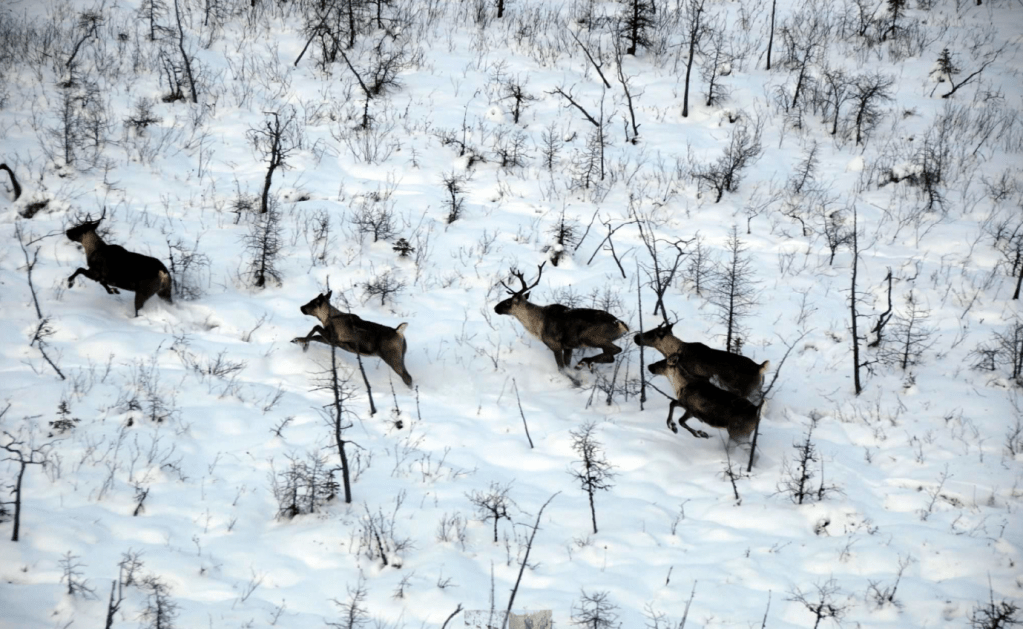
Boreal caribou (tâdzié in Dené; sagow atihk in Cree; Rangifer tarandus) are a culturally important species for our Nations, and the lands they depend on for survival have been impacted by industry for several decades. The Alberta government does not protect habitat for tâdzié / sagow atihk; their main action to protect tâdzié / sagow atihk is to kill wolves. Meanwhile, the condition of their habitat gets worse. These impacts continue even though there are formal requirements to protect these lands under Canadian law.
We created the Tâdzié-Sagow Atihk Stewardship Plan to bring back our ways of caring for tâdzié/sagow atihk and the lands they depend on, based on our Dené and Cree laws and stewardship values. The plan rests on an Elders Declaration, which is a legal document that states we have the right and duty to make decisions for our homelands. To build the plan, we worked with a group of Elders from our Nations, who helped us to interpret knowledge shared by over 200 Elders and Knowledge Holders into the stewardship actions and principles of the plan. We used this knowledge along with other knowledge sources to figure out where to take these stewardship actions. We confirmed the details of the plan with Elders and Knowledge Holders from our Nations.
The Government of Canada helped fund development the Stewardship Plan after losing a court case about protecting the lands tâdzié / sagow atihk depend on. However, the Government of Canada does not have a way to support putting the plan into action. We have suggested ways for our governments to work together, learn from each other’s systems of stewardship and wildlife management, and move towards shared decision-making in the future.
 Relational Thinking