By Michael R. Fox, Todd J. Landers, and James C. Russell
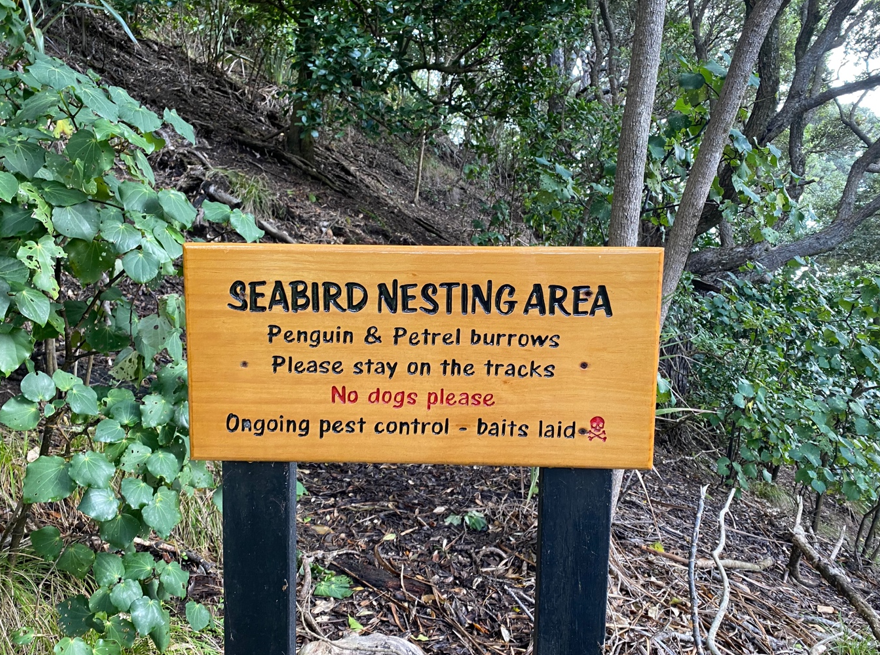
Around the world, wildlife is returning to places from which it once disappeared, and sometimes people do not expect these returns. This is largely good news—but it raises an important question: how do we avoid potential conflict over wildlife or over the actions we need to manage their return?
In this study, we asked what support looks like when a seabird returns to the edge of a large city, using the Waitākere Ranges on the edge of Auckland (Aotearoa New Zealand) as a case study. Grey-faced petrels (ōi) have begun to reappear here, largely due to community-led conservation. These nocturnal seabirds nest in burrows and were largely lost from the mainland after introduced predators such as rats and stoats arrived. We wanted to understand how local residents felt about this return, and which actions they would support to help it continue. We surveyed 426 residents online, asking about their knowledge of local birds, their feelings towards grey-faced petrels, and their support for six management actions—from increasing predator control to measures that affect everyday life, such as keeping pet cats indoors at night or changing dog rules at some beaches.
Most people felt positive about grey-faced petrels, even though many could not name or recognise them. Support for predator control was very high, whereas support was lower for actions requiring behaviour change. In particular, pet owners were less willing to support measures that would affect their animals. This suggests that any conflict is less about the birds themselves, and more about the actions to support them.
One result stood out. People did not need detailed knowledge of grey-faced petrels to support their recovery. Instead, people with stronger general knowledge of local birds tended to feel more positive and more willing to support actions to help them.
For managers, we recommend starting with actions that already have strong public support, like predator control, and recognise that disagreement may be more relevant to management actions than over the species themselves.
 Relational Thinking