By Sarah Woodbury, Kirsten Vinyeta, William Munger, and Sarah Klain
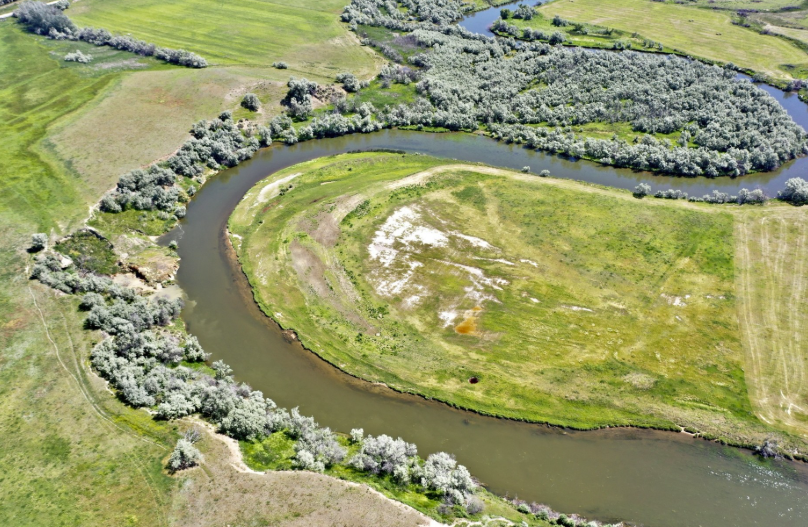
Ecological restoration projects bring together people who care about land and water for myriad reasons. This study looks at how rural landowners who farm and ranch along Battle Creek in southeastern Idaho, USA understand and value their land and water. The research focuses on how those views shape their responses to a downstream restoration project that the Northwestern Band of the Shoshone Nation leads at a site called Wuda Ogwa.
Wuda Ogwa has cultural and historical significance for the Tribe. Agricultural practices have reduced the water quality of Battle Creek. While the Tribe owns and is restoring this site, the ecological health of Wuda Ogwa also depends on how people upstream manage their land. The upstream land is privately owned and used for crops and livestock. The researchers interviewed 13 upstream landowners to better understand opportunities and challenges for improving water quality.
The interviews show that landowners hold many strong values connected to farming. These include making a living from the land, caring for family farms passed down through generations, pride in hard work, and a deep sense of identity tied to land and water. Many landowners described farming as something that is “in their blood.” At the same time, the study found that people also experience disvalues—negative feelings linked to land, nature and their livelihoods—such as stress, anxiety about making ends meet, fear of water or wildlife damaging crops or livestock, and frustration with environmental regulations.
This research shows that effective restoration depends on understanding people’s values and disvalues related not only to nature but also to other people in the community. While many landowners expressed respect for the Tribe and support for restoration in principle, concerns about costs, water rights, wildlife impacts, and trust created barriers. Past injustices and misunderstandings between Indigenous and settler communities also shaped these relationships.
The study concludes that successful restoration on working lands requires listening carefully to local experiences, recognizing both positive and negative relationships with nature, and building trust over time. By acknowledging livelihoods, anxieties, and cultural histories alongside ecological goals, restoration efforts can create more lasting and collaborative responses that address landowner concerns, support river restoration, and benefit the Tribe.
 Relational Thinking