By Montti L, Gasparri NI, Trumper A, Amicone C, Anticoli A, Burns SL, Casertano S, Eleuterio A, Gennerich MJ, Giessen L, González MV, Santos Silva M, Vázquez F, Velazco SJE, Yanosky AA , Zurita GA & Piquer-Rodríguez M.
Read the Spanish translation here
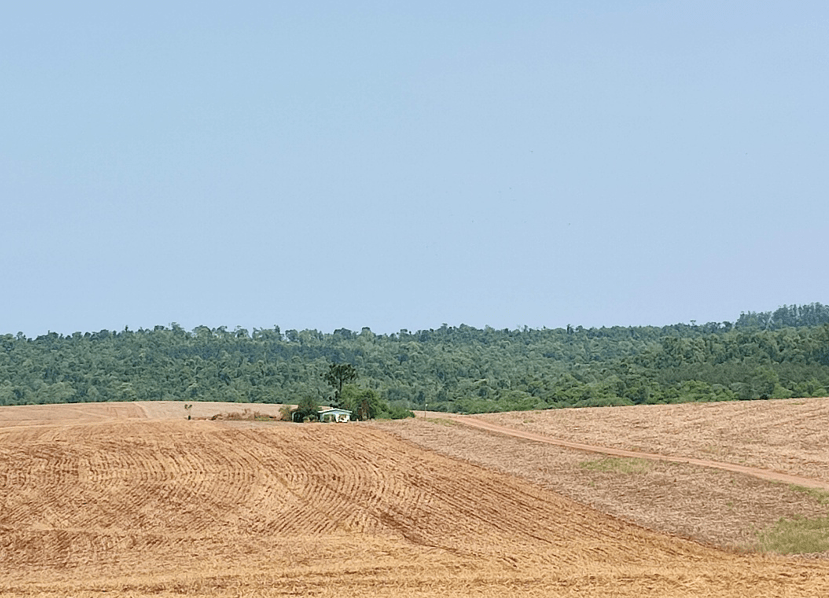
Native forests do not recognise political borders, but their conservation does. The Alto Paraná Atlantic Forest ecoregion, which spans Argentina, Brazil, and Paraguay, exemplifies a “natural experiment” to explore how human-made borders shape forest conservation.
Although this landscape was once covered by a subtropical forest with broadly similar bioclimatic conditions the across ecoregion, it now exhibits marked differences across countries in forest conservation and socio-economic conditions.
In this study, we disentangled these differences and explained why they exist. To do so, we combined current spatial data on social, cultural, and environmental indicators with insights from historical and political analyses. We measured cross-border differences among pairs of countries per indicator (using mathematical Euclidean distances) to make country contrasts visible and comparable. For example, we compared the area under soybean cultivation in Brazil-Paraguay, Argentina-Paraguay and Argentina-Brazil.
Our results showed that national governance choices matter as much as, or more than, ecological conditions in determining forest conservation. Even though demographic, cultural, and economic characteristics were less pronounced, Argentina emerged as the most distinct case, combining higher forest conservation, less agricultural-livestock land, and fewer burned lands, with higher human development. This pattern is linked to late colonisation, less urban expansion and a development model focused on conservation-oriented tourism. On the other hand, Brazil and Paraguay displayed more similar land uses characterised with high cattle density and huge agricultural expansion, mainly driven by soybean production, resulting in higher forest loss. These results reflect socio-cultural differences and development strategies, together with regulatory frameworks and implementation capacity that shape the effectiveness of land-use policies and efforts to reduce deforestation.
Importantly, our results demonstrate that conservation and human development (beyond economic indicators) can go hand in hand. This challenges the widespread assumption that conservation necessarily limits development.
Finally, we highlight that transborder conservation strategies cannot rely exclusively on ecological criteria. They need to consider social factors and be adapted to fit each country’s needs, aligning human development and environmental policies. Likewise, we recognise that historical and political contexts of each country influence land use decisions. Thus, conservation policies that fail to integrate these dimensions risk producing ineffective or even counterproductive outcomes.
 Relational Thinking