By Neema R. Kinabo, Dominic A. Martin, Koggani D. Koggani, Berta Martín-López, Milena Gross, Christian Schleyer, Verena Hackman, Andreas Thiel, Katrin Böhning-Gaese, and Peter Manning
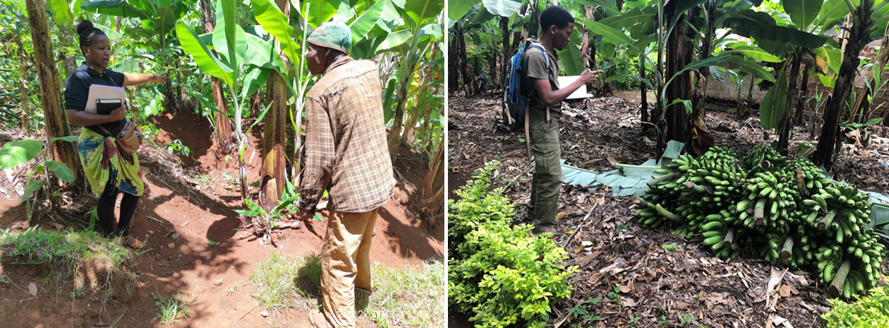
Farming systems support the livelihoods of many people, but climate change, declining soil fertility, rising input costs, and unstable markets threaten farm system sustainability. To promote their sustainability, we need to understand farms not only as a means of food production, but as systems shaped by the interaction of people, nature, and economics.
To identify the challenges and solutions to farm system sustainability on the southern slopes of Mount Kilimanjaro, we combined different types of information. We surveyed 306 farmers to identify the main farming systems, then interviewed 15 farmers regarding farming practices, challenges, and solutions. We augmented this information with local expert input, including government officials. We also estimated costs and benefits of each system and compared farmers’ views of the impact of their farming practices on biodiversity, soil, and yield, with results from ecological studies on the same farms.
We identified three main farming systems: (1) maize–bean; (2) homegardens; and (3) coffee. All three systems were profitable under good conditions, but vulnerable to environmental and market-related changes. Farmers and experts highlighted four main challenges across systems: (1) environmental constraints, for example, unfavorable soils and climate; (2) high production costs and weak markets; (3) limited infrastructure; and (4) gaps in agricultural advice and support.
Proposed solutions were nested at different levels. At the farm level, low-cost actions included manure fertilization, biological pest control, and planting drought-resistant crops. At the institution-policy levels, proposed solutions included the use of farmers’ cooperatives, better access to agricultural information, supportive government policies on subsidies, and fair market regulation. Importantly, farmers’ perceptions of the long-term environmental impacts of using agrochemicals matched findings from ecological studies, showing that farmers understand the consequences of their practices, but environmental pressures, for example, low soil fertility, override long-term environmental consequences in their decisions.
Our study shows that people need integrated knowledge from a range of sources and types to understand and promote sustainable farming. By bringing together social, ecological, and economic perspectives, we gained insights that are relevant not only for Kilimanjaro but also provide a blueprint for researchers of smallholder farming systems facing similar challenges elsewhere.
 Relational Thinking