By Giacomo Pagot, Gianluca Grilli, and Paola Gatto
Read the Italian translation here
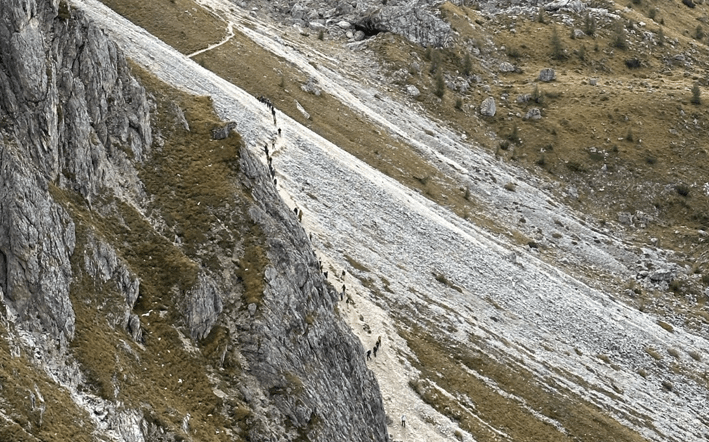
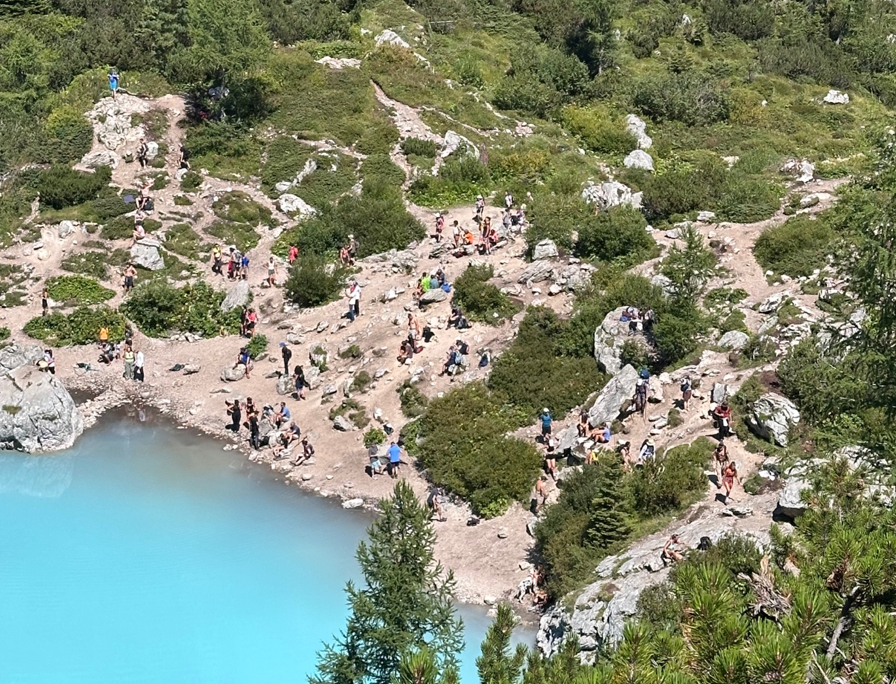
Outdoor recreation is important for many reasons. It provides health and psychological benefits for those who engage in it, and it also brings economic opportunities to communities around natural and rural areas, such as mountain communities. However, when too many people visit the same places, overcrowding becomes an issue. This affects not only the quality of the visitor experience but, more importantly, causes ecological damage in areas where delicate natural processes take place. This is happening in many mountain regions around the world, from the Himalayan peaks to the Alps.
In our study we focus on the Alps, one of the most visited mountain areas globally. The Alps’ popularity, however, puts significant pressure on the environment. Impacts include disruption to wildlife reproduction and feeding, littering, and damage to soil and vegetation. There are several strategies to prevent or reduce overcrowding including restricting visitor access. In this study, we explored how people who use the mountains frequently perceive such access restrictions. Our focus was on members of the Italian Alpine Club (CAI), the largest mountaineering association in Italy.
Results show that most respondents would accept certain access restrictions, especially if they are free of charge. Their acceptance is influenced by factors such as their place of residence, level of education and training, how often they visit the mountains, and the types of activities in which they engage. Although we focused on a specific group of experienced recreationists, our findings are meaningful. These “expert” mountaineers – who are likely the most affected by access restrictions – still show a willingness to accept them. Their environmental awareness and direct experience with overcrowding seem to outweigh their personal interest in unrestricted access.
 Relational Thinking