By Callum Leavey-Wilson, Janet Fisher, and Sam Staddon
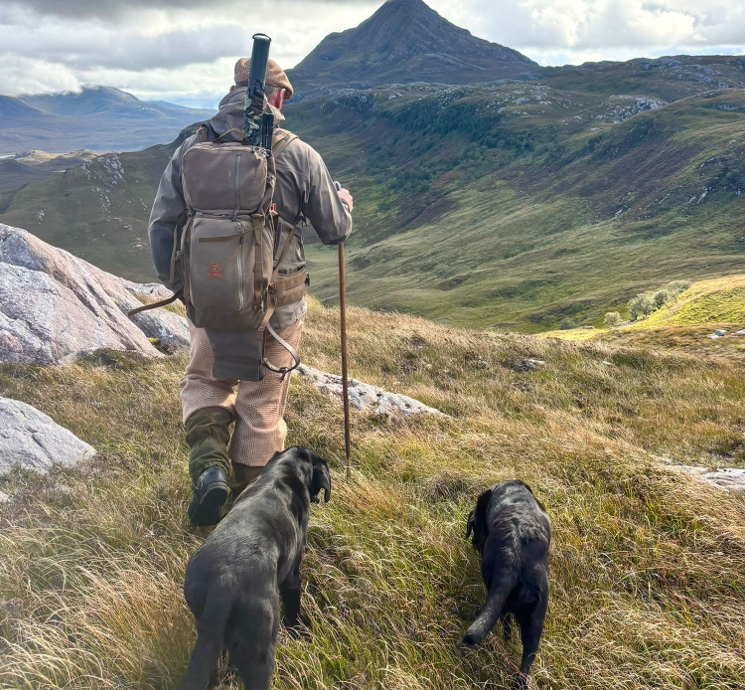
Credit: Photo kindly provided by David Allison and used with his permission.
As part of addressing climate change and biodiversity loss, there are significant changes being made to the way people use land around the world. In the Scottish Highlands, one of the main land-use changes underway concerns deer management. The Scottish Government argues that to support woodland and peatland recovery as part of their climate and nature goals, the environmental impacts of deer need to be reduced.
However, the views of professional deer hunters, known as ‘stalkers’ in Scotland, are poorly understood, even though stalking has existed for over 200 years. Moreover, changes to deer management will impact stalkers most as they are the people responsible for delivering them.
The aim of our paper was to address this knowledge gap, through interviewing stalkers about what they thought of current changes to deer management and land use in the Highlands. We then applied a conceptual framework to our interview data to help make sense of the stalkers’ responses.
Overall, we found that stalkers have a wide range of perspectives, with some very fearful of and hostile to current changes, whilst others saw a positive vision for deer management and land use in the Scottish Highlands. The main message from our research is that we need to seek out and listen to the voices of the individuals doing the hard work on the ground, which very often get lost in the noise of national policy debates. Only then can we find common ground on contentious environmental issues and build a better future for people and nature.
 Relational Thinking