By Karine Matos Magalhães, Emma Deeks, Aline da Silva Cerqueira, Gabriel Henrique Ferreira Silva, Fabiana Aguiar Santos, Terry Dawson, and Pavel Kratina.
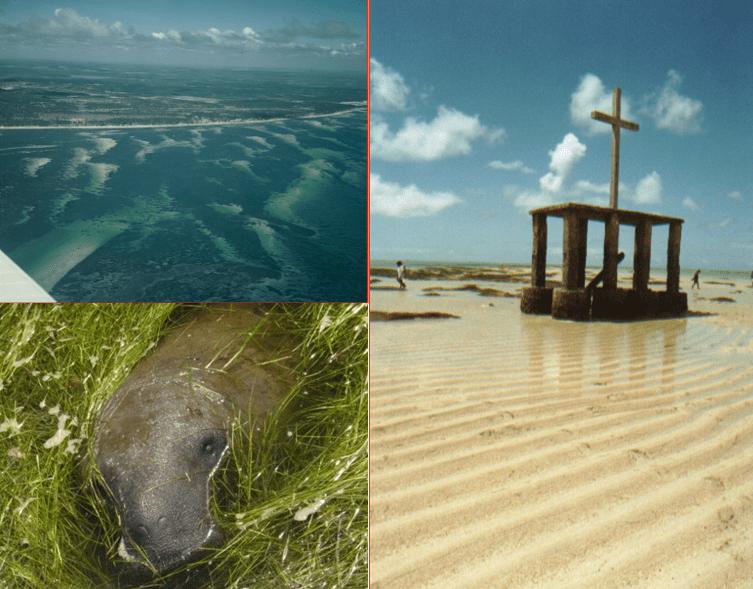
What we studied
Seagrass ecosystems support fisheries, store carbon, and protect shorelines globally, yet they are declining rapidly. We combined historic aerial photos from the 1960s, satellite imagery, local ecological knowledge, researchers who have witnessed environmental changes over time, and both Portuguese and English documents to track how seagrass meadows have changed around Itamaracá Island, off the Brazilian coast, over the last 50 years. We also used the combination of this complimentary evidence to understand the socio-economic and environmental drivers of these changes.
What we found
By combining these different perspectives, we discovered that seagrass cover has declined sharply since the 1970s, with the greatest losses occurring between 1990 and 2009. People who use and know the coast identified several causes acting together, including damaging fishing methods, coastal construction, reduced water quality and, historically, the collection of seagrass to feed manatees in rehabilitation.
Why it matters
Our mixed approach shows how local knowledge can add important detail on timing and causes of seagrass loss that satellite images alone cannot provide. We also offer a transparent way to assess how strongly each pressure is linked to seagrass decline, helping to guide management actions. Furthermore, addressing language and data barriers is essential, as these obstacles often prevent non-English-speaking researchers from contributing to global conservation and restoration efforts.
What can be done
Priorities now include improving water quality, limiting damaging fishing gears and boat anchoring in areas where seagrass still occurs, and working with local communities to monitor change along the coast. Protecting seagrass is not only about conserving underwater plants; it is also about safeguarding local livelihoods and cultures, and the many species and ecosystems that depend on them.
 Relational Thinking