By Hanna S. Paikert, Bente Castro Campos, Frank Jauker, Till Kleinebecker, and Yves P. Klinger
Roadsides are everywhere, but many people don’t realize they can be valuable spaces for nature. These narrow strips of grass and wild plants can link habitats, give food and shelter to insects, and help native species survive in landscapes that agriculture or cities dominate. Yet in Germany and many other countries, roadsides are often managed in ways that reduce their value for plants and animals, for example, by cutting too often or leaving vegetation cuttings on-site.
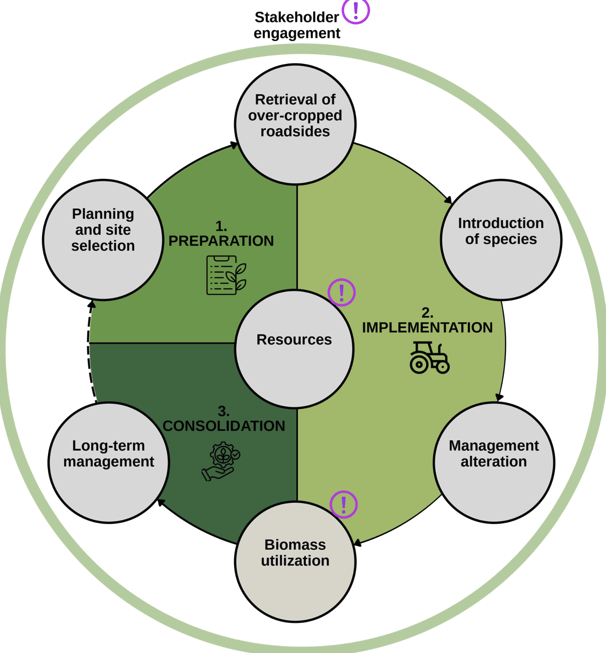
To find out what hinders and facilitates biodiversity-friendly roadside management, we spoke with practitioners from 26 roadside management projects across Germany and later held a follow-up group discussion with 35 participants. We asked what they were already implementing, what was holding them back, and which solutions they saw for the future. Many practitioners had restored former roadsides, sown seeds of local wild plants, or switched from mulching and leaving the cut material behind to mowing and removing the cut material, which helps smaller, native species thrive.
However, these approaches were not always easy to apply. A big challenge was limited support from municipalities, who own the roadsides, and local residents, who often preferred tidy-looking roadsides. Most projects also faced shortages of money, equipment, and trained staff. On top of that, current laws classify the cut material from roadsides as “waste,” making its disposal costly instead of allowing it to be reused, for example, for producing energy.
Our participants suggested several solutions: raising public awareness, offering training for staff involved in roadside management, setting up cooperative use of equipment, creating new funding options, and changing waste laws so that cut material can be used for energy production. With better engagement, smarter resource-sharing, and simpler regulations, these neglected strips of vegetation could become important corridors for wildlife across Germany’s rural and urban landscapes.
 Relational Thinking