By Shane P. Mahoney and Richard D. Honor
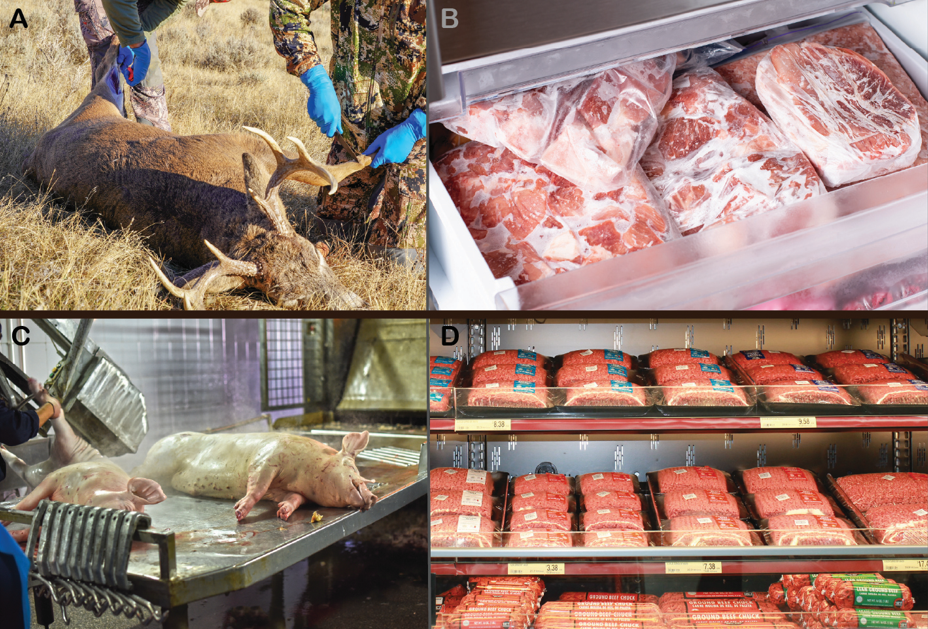
Although it is often described as a leisure activity, “recreational” hunting is practiced for many reasons and results in the harvest and consumption of large amounts of wild meat. However, because such hunting is commonly framed as a pastime rather than a food procurement system, the socio-economic contributions of wild meat from recreational hunting have received little scientific or policy attention in highly developed countries such as the United States (US).
In this study, we examined how much wild meat is produced through regulated hunting in the US and what this food is worth in economic terms. We compiled harvest records from state wildlife agencies for large hunted animals (ungulates, black bear and alligator) and using published data, we estimated the edible mass, protein, and caloric content of the meat derived from these harvests. We found that hunters harvest approximately 7.5 million of these animals each year, producing about 236,000 tons of wild meat. This is equivalent to roughly 1.4 billion meals (based on 6-ounce servings) and provides more than 52,000 tons of protein annually. At a national scale, Americans actually consume substantially more wild meat than lamb and veal combined.
We estimated how much it would cost to replace wild meat with store-bought meat. Using a national dietary survey, we identified the types and amounts of store-bought meat consumed by Americans and linked these data to retail price and nutrient content databases. We estimated that replacing the protein provided by wild meat with protein from grocery-store meat would cost approximately $4.2 billion per year (2024 USD).
These findings represent only one part of a much broader picture. Wild meat is nutrient-rich and can improve food security and human health—particularly in rural and lower-income communities. Regulated hunting also contributes to the US economy and provides direct funding for wildlife conservation and habitat management programs. Overall, our results highlight that hunting supplies a significant and valuable source of food in the US, supports beneficial biodiversity outcomes and should be more fully considered in discussions about sustainable food systems, land management, conservation policy, and rural livelihoods.
 Relational Thinking