By Cátia Freitas, Shelley Hannigan, Alecia Bellgrove, Paul Venzo, and Prue Francis
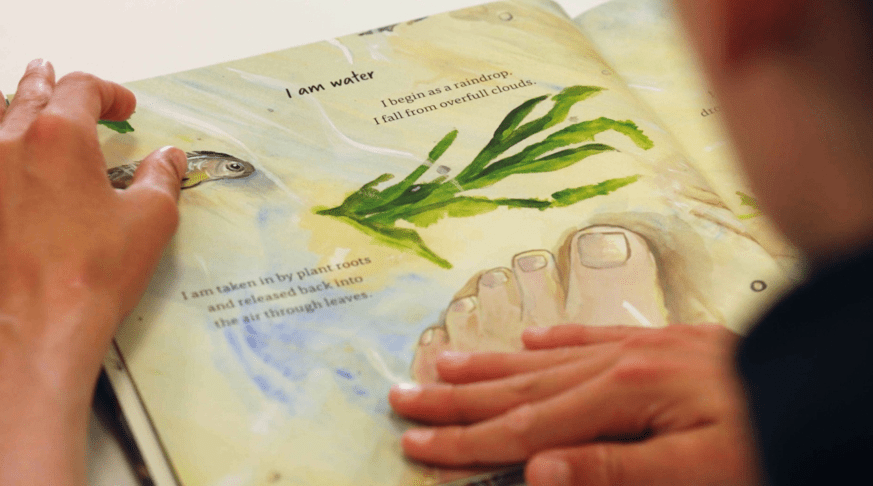
Photo courtesy of Stefan Andrews
When you ask most children to imagine a coral reef, they describe colourful tropical fish swimming around bright corals – scenes straight out of Finding Nemo. But for many Australian children, their local reef, a vast temperate ecosystem quite different from the tropical images of Finding Dory, tells a very different story.
This disconnect between perception and reality became clear when working with primary school students living near one of the world’s most biodiverse ecosystems – the Great Southern Reef. Despite its richness, most children had little idea of what lay beneath the waves in their own backyard.
While the ocean influences every aspect of human life, most school science programs remain focused on land. This gap leaves young people with limited understanding of marine life and ocean systems. Schools can play a vital role in helping children build both knowledge and a sense of responsibility for these ecosystems.
We developed an ocean literacy program centred on the Great Southern Reef, an extensive but largely unrecognised temperate ecosystem stretching along Australia’s southern coast. Our approach was simple yet effective: picture books as the central teaching tool, paired with hands-on classroom activities and coastal field trips.
The results were impressive. Initially, many students pictured their local reef as tropical. By program’s end, they showed a clear understanding of their temperate reef system, recognising its unique species, interconnections, and the importance of protection.
But the impact went deeper than facts and figures. The picture books wove in messages about environmental care that encouraged children to feel personally invested in ocean health. Combined with hands-on learning and coastal experiences, the program sparked curiosity and connection with the local reef, laying the foundation for genuine environmental stewardship.
The model is adaptable beyond Australia. Combining compelling stories with nature-based experiences offers an engaging way to connect children to their local marine environments, wherever they live.
As we face mounting environmental challenges, programs like this offer hope. By improving ocean understanding in schools and inspiring young people through stories and experiences, we are nurturing the next generation of informed, engaged ocean guardians – one picture book at a time.
 Relational Thinking