By Lloyd Jenkins, (University of Birmingham), Jonathan Sadler, (University of Birmingham), and Adam Bates (Nottingham Trent University)
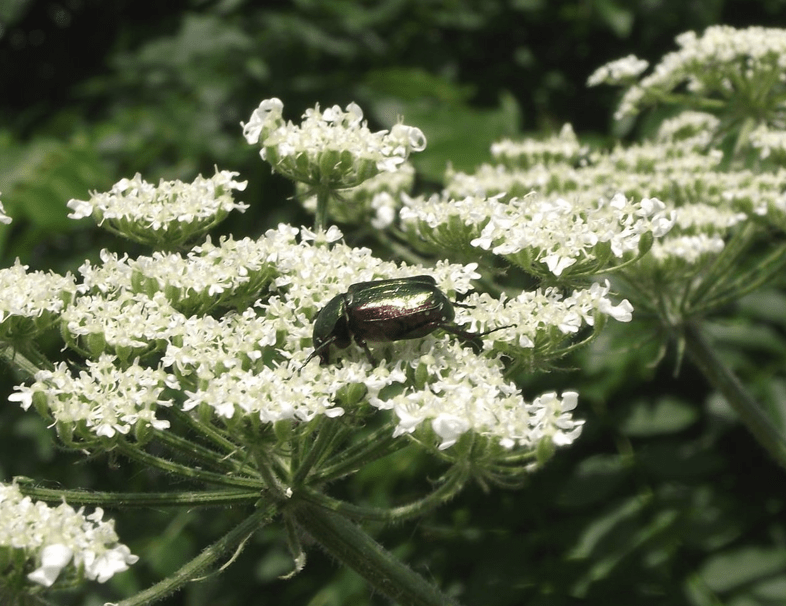
England’s traditional orchards are important habitats for a range of species. Importantly, the orchards provide habitat for many species that do not live in other landscapes. However, changing land use and the loss of traditional or customary practices are leading to the decline of these once common orchards. As a result, as habitats, orchards are increasingly precarious and fragmented.
This paper focuses on the Noble Chafer beetle (Gnorimus nobilis), as a species that shows a habitat that unstable because it relies heavily on landscape management decisions and it is important to coordinate those decisions to protect the habitat and the beetle. We use this charismatic invertebrate as an indicator of environmental health to explore the effect of changes to England’s orchard landscapes on biodiversity.
Interviewing key stakeholders involved in the management and preservation of traditional orchards, we examine the competing motivations, practices and understanding of habitat that inform management approaches to maintaining traditional orchards. Human action lies at the heart of how people established orchard habitats in the past, and how they remain and how people maintain them today. However, competing approaches to orchard management and maintenance, albeit with the best intentions, challenge the maintenance of a continuity of habitat for the Noble Chafer. We argue that to achieve a balance between competing landscape needs there needs to be more education, and importantly a reframing of orchard practices, to raise awareness of the Noble Chafer and its habitat.
 Relational Thinking