By Jacinto Cunha, Edna Cabecinha, Sebastian Villasante, Stefano Balbi, Michael Elliott, and Sandra Ramos
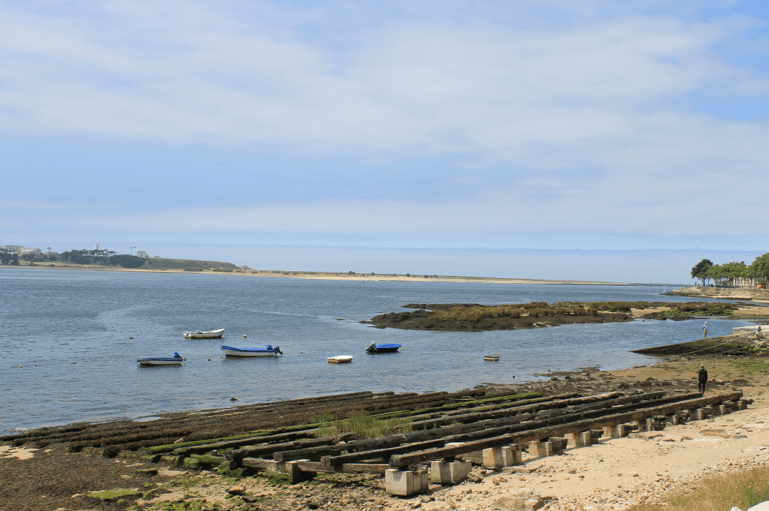
Our study set out to understand how people who work and live along the north coast of Portugal see the benefits that the sea provides, and how this local knowledge compares with what is shown by maps based on indicators and scientific knowledge. We focused on the regulation and maintenance services that nature provides by keeping the environment healthy for example, protecting the coast from erosion, maintaining good water quality, and supporting habitats where young fish grow. These services are essential, but they are often invisible to most of us. To explore this, we brought together local experts from science, government, industry and civil society. They worked in groups to map the origin of these, what threatens them, and where conflicts occur between nature and human activities. We then compared their maps with maps previously produced through scientific data and models.
We found both strong agreement but also important disagreements. Both the stakeholder and scientific maps highlighted estuaries and nearshore areas as the main areas for important services. These areas are known for supporting biodiversity, providing nursery grounds or buffering the coast, and stakeholders clearly recognized their value. But stakeholders, with their local knowledge also pointed out additional areas that the scientific maps did not capture, often due to missing scientific data. At the same time, indicator-based maps revealed offshore causes of adverse change, such as fishing and shipping, that stakeholders tended to underestimate. This suggests that while people have strong awareness of what happens near the coast, offshore activities remain less visible and harder to assess without formal data. Participants also shared a clear 20-year vision: a “greener and bluer” region with healthier ecosystems, sustainable human activities, and better public involvement in decisions. These are needed to deliver benefits for society. Their proposed actions, improving environmental literacy, strengthening monitoring, restoring habitats, and planning for the long term, align closely with European and global sustainability and biodiversity goals.
Overall, by placing these two knowledge sources side by side, our work shows that integrating science with local knowledge could lead to a more complete and valuable marine spatial planning. This therefore supports a more transparent, inclusive and effective marine management, helping coastal regions prepare for a sustainable future.
 Relational Thinking