By Xiaoxue Chen, Zuyi Lyu, and Junxi Qian
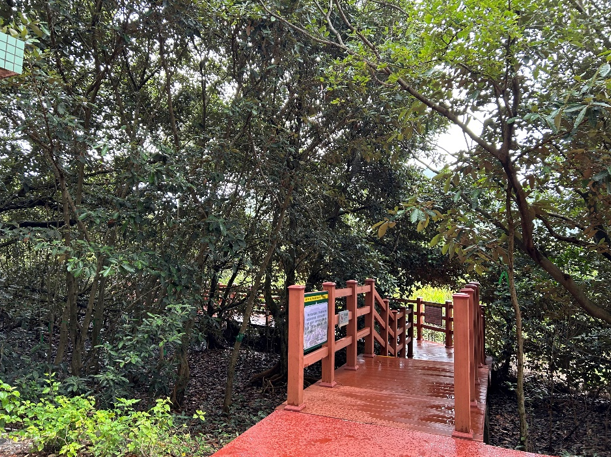
Photo Credit: Xiaoxue Chen
Currently, scholarship on education to foster people’s connectedness with nature primarily focuses on children. However, many adults living in major cities have also faced decreased nature experiences and connections. Involving them in nature-based educational programs may improve their nature connectedness. This paper helps understand how urban adults perceive, engage in, and benefit from nature education programs to advance a fuller understanding of how such programs could promote wider public health and social wellbeing.
In 2023, we conducted a case study based on in-depth interviews with 14 volunteer nature instructors from Baguang, a nature education school in Shenzhen, China, to learn about their insights into adult practices and experiences of nature education. The interviews revealed a complex picture of how lived experiences in Shenzhen have hindered many adults’ involvement in nature education. At the same time, the research revealed how volunteers themselves have explored different nature-education strategies and experienced meaningful changes in daily lives under the influence of nature education. Specifically, the hectic work routines and pragmatic preoccupation with making money in Shenzhen, a metropolis that relentlessly pursues economic growth and always prioritizes efficiency and productivity, have resulted in significantly lower adult participation in nature education than children. Many adults even perceive nature education as unnecessary or irrelevant to their lives as it cannot yield the practical values they desire. Meanwhile, volunteers integrate the principles they learn from nature education into their personal lives, emphasizing provisional learning of ecological knowledge, embodied experiences based on multi-sensory engagement, and regular interactions with nearby nature. These practices generate positive changes in their relationships with nature, themselves, others, and the city, ultimately enhancing their subjective wellbeing amid alienating urban life.
Based on these findings, our study demonstrates that adults can gain from nature-based educational programs in ways that differ from those of children. It also highlights the potential of nature education practices to benefit wider audiences living in urban contexts and informs the formulation of more inclusive sustainability-oriented policies and initiatives.
 Relational Thinking