By Bryn Spielvogel, Kevin E. Geoghegan, Sasha Mader, and Wenting Yu
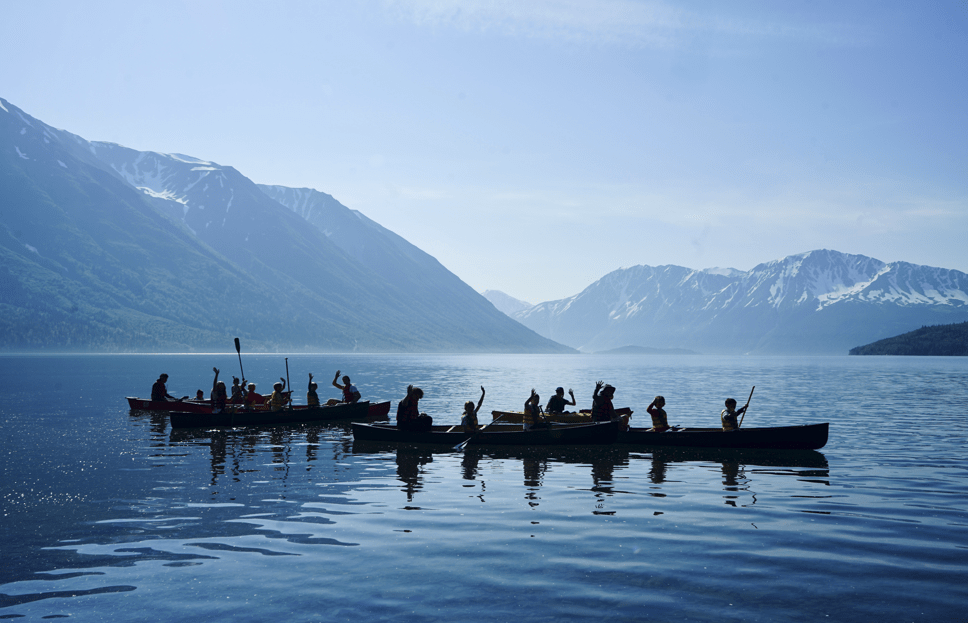
Youth paddle canoes across an expansive mountain lake, with several waving toward the camera—an example of shared experiences that can foster belonging, engagement, and affinity for nature in summer camp settings. Photo taken at Camp K by Rachael Henderson (2022).
Kids today spend more time on screens than under trees. As cities grow and green spaces shrink, increasingly more children rarely get the chance to explore the outdoors. That’s a problem—not just for their well-being, but for the planet. Research suggests that people who feel emotionally connected to nature are more likely to care for it. So how do we help kids build that bond?
Our research looked at one possible answer: overnight summer camps. These camps take kids away from their usual routines and immerse them in natural settings for a few days. But do they really make a difference? And does it matter if a child lives in a concrete jungle or a leafy suburb?
To find out, we surveyed 323 children, ages 9-10, who attended 35 overnight camps across the United States. We asked how connected they felt to nature before and after camp. We also measured how “meaningful” their camp experience was—did they feel like they belonged and were excited to participate? Finally, we checked how much green space was in their home communities.
What we found was exciting. Kids who had meaningful experiences at camp felt more connected to nature afterward. This was true whether they lived near parks or in neighborhoods with almost no greenery. In short, camp worked for everyone. This is especially hopeful, because the challenges we face—climate change, biodiversity loss—are global. If we want future generations to protect the planet, we need to spark that emotional connection early. Summer camps may not be the only solution, but the data suggest they’re a powerful one. And the secret isn’t just being outdoors – it’s creating experiences where kids feel included, engaged, and inspired.
So whether you’re a parent, educator, or policymaker, here’s the takeaway: investing in programs that combine nature with belonging and excitement can help grow the next generation of environmental stewards. And that’s something the whole world needs.
 Relational Thinking