By Ivana Živojinović, Stojan Ivanović, Oliver Tošković, Helga Pülzl, Rik De Vreese, Clive Davies, Dennis Roitsch, Georg Winkel, Liisa Tyrväinen, Jakub Kronenberg, Corina Basnou, Marko Lovrić, Jakob Derks, Silvija Krajter Ostoić, Dijana Vuletić, Nicola da Schio, Ivana Sentić, and Jelena Tomićević-Dubljević
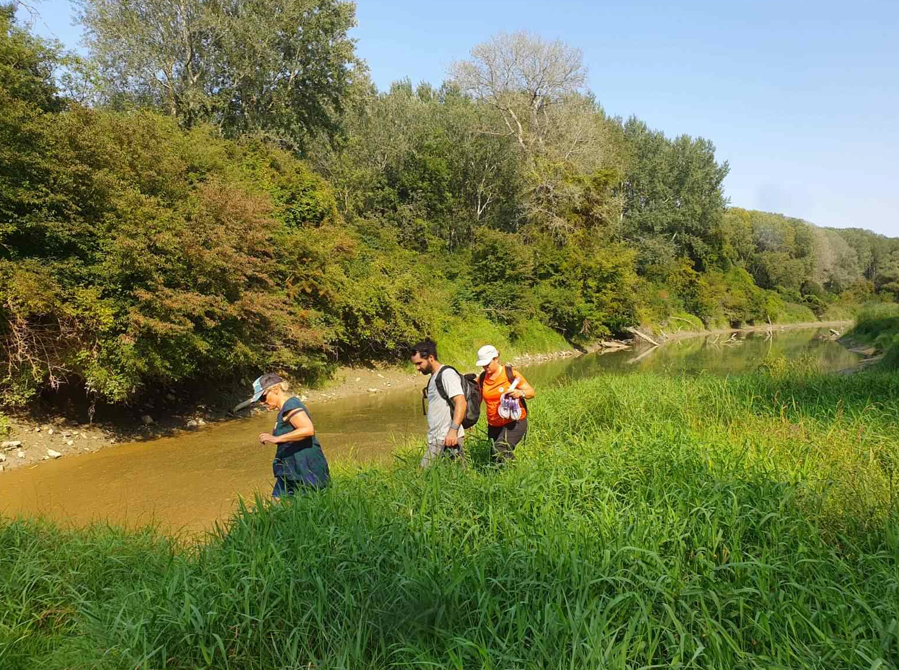
Green space does not automatically make a city healthier, but health benefits happen when the green space is usable and accessible in daily life.
Across Europe, forests and other green areas cover roughly 40% of the urban landscape. On paper, that sounds like good news, but coverage alone doesn’t tell us whose benefits are met. A city can claim impressive “green coverage” while entire neighborhoods still experience nature as far away, unsafe after dark, hard to reach without a car, or simply out of sync with daily routines.
That gap between availability and use motivated our study. Instead of asking how much green space cities have, we asked how people experience and use it. We surveyed 10,462 people in 33 European countries, focusing on the forest or park each person visits most often. We asked why they go and how often, how they get there, and what they value. This matters because many international studies focus on how much green space exists, while everyday wellbeing depends on use. If people do not visit green spaces, the benefits remain theoretical.
What drives the use of green space is not hard to explain. It comes down to everyday things: motivation, obstacles, and experience. Across countries, respondents described two broad reasons for visiting forests and parks: Some seek a getaway, calm, beauty, being alone, escaping stress, learning about nature. Others seek something more social and activity-based, exercise, walking the dog, taking children out, meeting friends and family, having a picnic. Neither motive is better, but they just require different conditions.
Preferences for the places people use most are clustered into two sets: The first is attractiveness (what makes a place feel comfortable and usable, such as seating, toilets, lighting, bins, playgrounds, sports areas, signs, picnic spots). The second is accessibility: how close it feels in time and effort, how easy it is to reach (walking routes, cycling options, parking, public transport), as well as the connectivity of areas.
The behavioral pattern is clear: proximity and easy access shape visit frequency. Most respondents reported visiting forests and parks 2–3 times a month. The most common way to get there was walking (53%), followed by car (31%), cycling (11%), and public transport (5%). People who walk or cycle to green spaces visit more often than those who rely on a car or public transport. This is not a moral argument, but it is friction. If visiting nature requires planning, money, a vehicle, or extra time, visits drop. If it’s reachable on foot or by bike, it becomes part of everyday life.
In this regards equity plays an important role. Access and use are not evenly distributed. In our sample, women tended to report slightly more frequent visits and placed higher importance on comfort and safety, especially good lighting at night, as well as “getaway” motives like beauty and escaping daily stress. Also, older respondents tend to visit more frequently. Higher education and higher income were linked with somewhat more frequent visits. These differences were modest, but consistent across a very large dataset, suggesting real gradients in who can make nature part of a routine and who faces more barriers.
Country and regional patterns also varied widely. Some respondents leaned more towards visiting city parks, others towards forests near towns. These contrasts should not be read as countries “doing it right” or “doing it wrong.” They likely reflect differences in urban form, planning histories, transport systems, and how green networks are distributed around where people live actually. Overall, a country can have high forest cover, but city residents could still struggle to reach it easily.
What should cities do if they want green space benefits that show up in real life? There are six main aspects to consider: (1) treat forests and parks as daily public infrastructure; (2) reduce friction by build safe, continuous walking and cycling routes; (3) connect green spaces to public transport and remove barriers like dangerous crossings; (4) get the basic set-up right including seating, lighting, toilets, and cleanliness and (5) design for both major use modes, quiet restorative areas and spaces for social life and activity, and (6) target financial means where barriers are highest.
People don’t need more slogans about the “value of nature.”, but they need nature that is near, safe, and usable, so it can earn a place in their everyday routine.
 Relational Thinking