By Joan Casanelles-Abella, Katherine Baldock, Sara Diana Leonhardt, Marco Moretti, Mark Patterson, and Monika Egerer
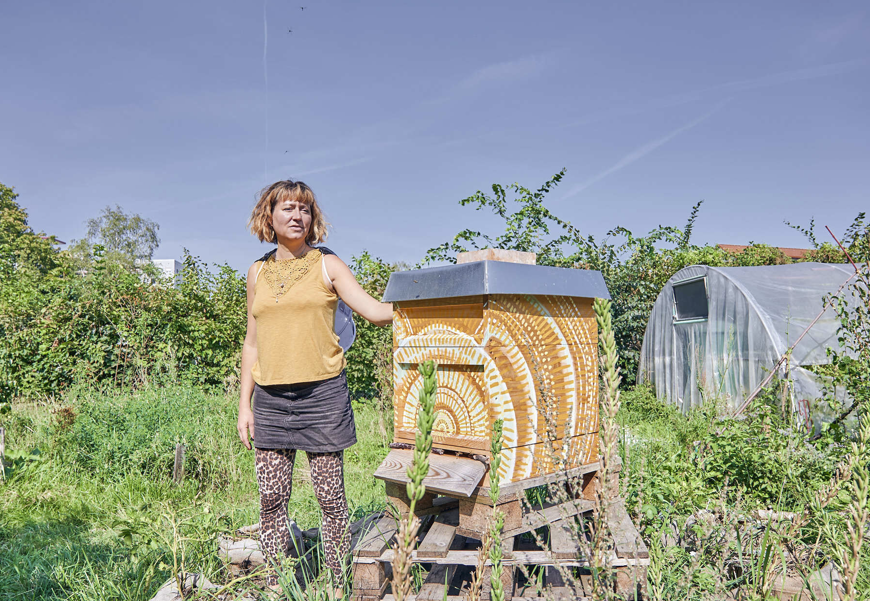
Urban areas are increasingly recognized as important for pollinator conservation, and people often see honeybees as ambassadors for bee diversity. However, the rapid growth of urban beekeeping raises concerns regarding whether there are enough food resources for honeybees and wild bees and potential disease transmission. Therefore, how cities can support wild bees and managed honeybees is an open question.
Here we present the general background on urban beekeeping and its ecological and biodiversity conservation challenges, the stakeholders involved, research gaps, and regulation opportunities to promote coexistence between wild bees and honeybees in cities. We do so by reviewing current scientific work and integrating input from beekeepers, beekeeping consultancies and associations, and practitioners. In particular, we examine six critical aspects of urban beekeeping: (1) growth trends; (2) uneven hive distribution; (3) altered thermal balances; (4) knowledge of urban floral resources; (5) resource competition; and (6) health and disease management.
We propose the “urban bee concept” to develop context-specific and equitable policies that integrate diverse stakeholder perspectives. This approach can guide cities in designing and managing urban landscapes to support managed and wild pollinators. Finally, our paper advocates for the key role of collaborative efforts, rather than confrontational ones, between researchers, beekeepers, practitioners, and society, to identify challenges and develop solutions with the aim of enhancing cities for all pollinators.
 Relational Thinking