By Milan Büscher, Laura Wallbaum, Leonie Schmechtig, and Florian Fiebelkorn
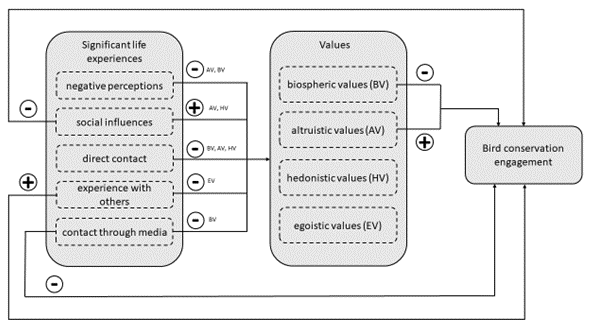
Experiences with nature, especially early in life, play an important role in shaping how people think about the environment and whether they later take action to protect it. Many people enjoy birds or spend time outdoors, but only some go on to actively engage in bird conservation. In this study, we explored which kinds of early experiences and personal priorities help explain this difference.
We used a two step research approach. First, we interviewed bird conservationists in Germany and asked them to describe experiences they felt were important for their path into bird conservation. These conversations highlighted recurring experiences, including spending time in nature, observing birds, learning from inspiring teachers or mentors, engaging with nature through books or documentaries, noticing environmental damage, and participating in conservation groups or educational programs.
Based on these insights, we conducted a survey with 510 participants in Germany. This included 177 bird conservationists and 333 people non conservationists. We asked participants to think back to experiences they had up to the age of 25 and to report what matters most to them in life. These priorities included caring about nature for its own sake, caring about other people, seeking enjoyment and comfort, and focusing on personal success or benefit.
The results showed clear differences between the two groups. Bird conservationists reported more formative experiences across all categories. The strongest differences were linked to structured settings such as schools, universities, conservation organizations, and professional contexts. Bird conservationists also placed greater value on nature itself, while people from the general public placed more emphasis on enjoyment and personal benefit. When we examined how experiences and values connected to conservation engagement, an important pattern emerged. Emotionally meaningful experiences linked strongly to developing care for nature (values). In contrast, structured experiences linked most strongly to actually becoming active in bird conservation. This suggests that effective conservation efforts should combine both approaches. Experiences that build emotional connection and concern for nature need to be paired with clear and supportive opportunities for participation if care is to turn into action.
 Relational Thinking