By Edith Shum, Vanessa M. Adams, and Georgina G. Gurney
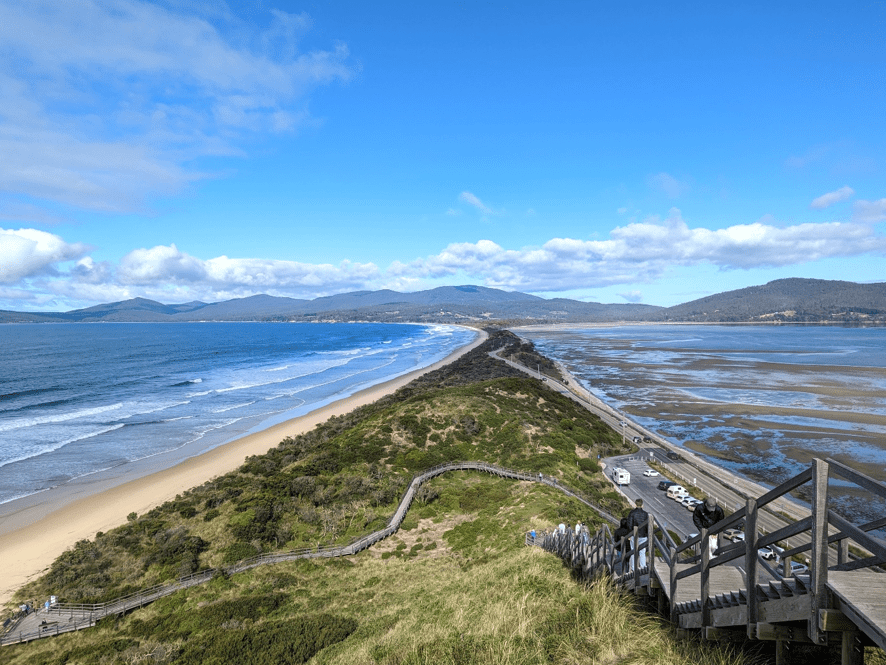
We know that places matter to people. Our favourite places are easy to remember- whether it’s an urban café, a white sandy beach, or a lookout point we always return to. Places shape who we are and how we see the world around us. Places, however, are not just defined by the land or what we do there- they also depend on why we go there, including the presence of the many species that live alongside us. Despite this, we still know very little about how plants and animals influence the way we connect to a place.
In this study, I wanted to understand how two well-known seabirds- fairy penguins and short-tailed shearwaters (or muttonbirds), shape people’s connection to a well-loved spot in Tasmania, Australia called The Neck. I surveyed 95 people who know or visit this area and asked questions about their experiences of the place, their feelings toward the seabirds, and how these elements relate to one another. We found that species influence the way people connect to a place in an indirect way. People don’t necessarily feel attached to a place because a species is present or iconic. Instead, their attachment grows through the experiences, memories, learning, and feelings that the species makes us feel. These connections can even carry over into other places with similar sounds, landscapes, or wildlife- suggesting that our bonds with species can create a feeling of ongoing connection, even in new places.
Understanding the ways in which species can make us feel connected to a place matters. As species decline or landscapes shift due to environmental challenges, people’s emotional ties to places may also change. By recognising the role species play in shaping place connections, we can better support people’s relationships with the environments they care about and help communities stay engaged even in the face of change.
 Relational Thinking