By Jan Daněk, Ľuboš Slovák, Tomáš Daněk, Jiří Pánek, Martin Schlossarek, and Linda Blättler
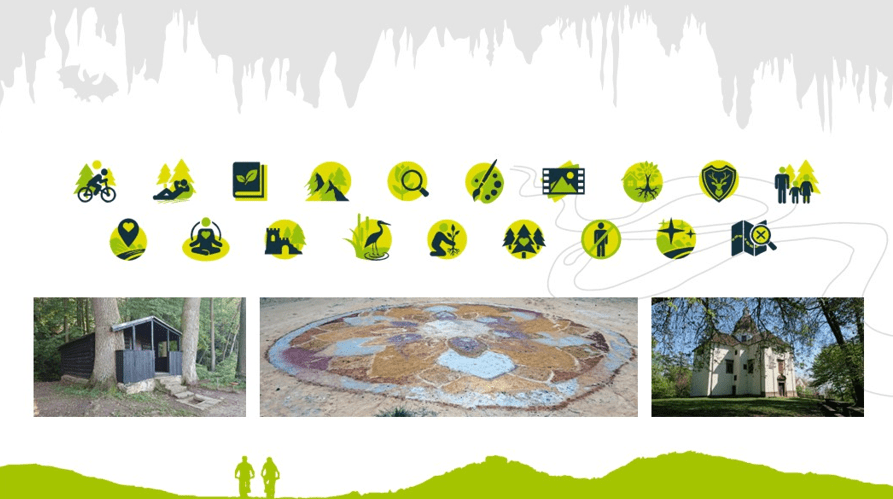
People go to nature, or visit their favourite places, for many non-material reasons. For example, people often go to nature for pleasure and recreational activities, to fulfil the need to connect with nature, or for aesthetic appreciation and experiences. But the whole range of these so-called cultural ecosystem services is much broader, as in our case study in the Czech Republic, we addressed 19 such non-material benefits.
In our research, we explored the non-material benefits that arise from interactions between people’s activities and the landscape. We wanted to capture a broad range of these benefits and to include different perspectives, such as the emergence of these benefits through emotions connected to certain places and values associated with living a good life. We applied a combination of methods, and surveyed people outdoors in two protected landscape areas.
Our results revealed that visitors to the case study areas use and value a wide range of cultural ecosystem services. The exploratory nature of the research allowed the emergence of uncommon categories such as a connection to nature, which appeared among the most frequently mentioned categories. Our results also revealed that many cultural ecosystem services relate to emotions connected to certain places and values associated with living a good life, most frequently the benefits for mental and physical health.
We provide a deeper understanding of cultural ecosystem services in various landscapes. Our approach highlights a broad range of non-material benefits and can help to balance the uneven focus on certain ‘prominent’ benefits, such as aesthetics and recreation, with consideration of others, such as therapeutic, sense of place, and existence values.
The use of cultural ecosystem services helps us to understand the context of the place-specific experiences of people in nature, for example, why people go to nature, and which non-material benefits they value in specific places or landscapes. We suggest that providing evidence about the use of cultural ecosystem services can help support better-informed environmental management and landscape planning that seeks to balance the multifunctionality of landscapes in protected areas, aligning conservation and landscape management more closely with the actual use and appreciation of cultural ecosystem services.
 Relational Thinking