By Laura Betancur-Alarcón, Laura Pulgarín-Morales, Camila Jiménez-Saénz, Rossella Alba, and Tobias Krueger
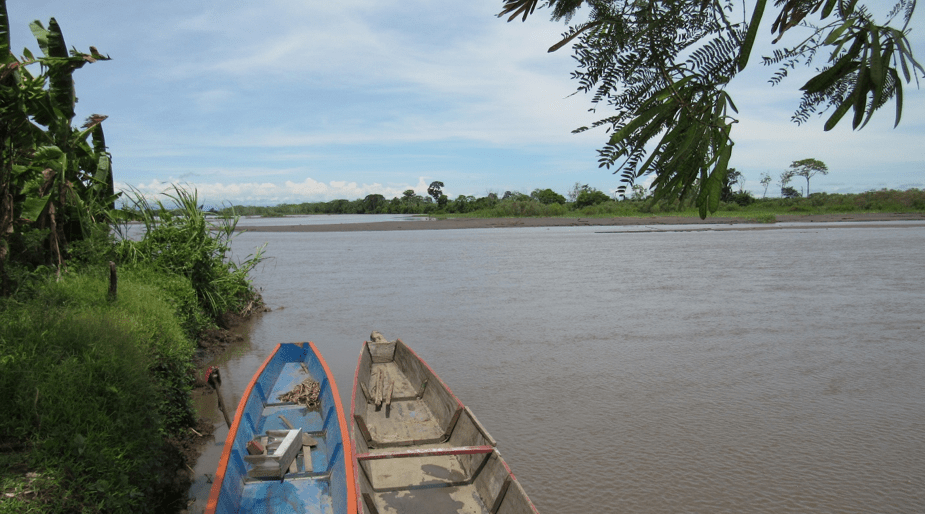
Tropical rivers have their rhythm. They rise and fall depending on rain in wet and dry seasons. Communities recreate ways of living together with this movement, organizing when to fish, when to mine stones from riverbanks, or when to find jobs in other sectors. But when a hydropower dam is built, this familiar rhythm gets replaced by something entirely different: the pace of electricity generation.
We studied to these temporal transformations together with ribereños, rural communities along Colombia’s Sogamoso River, after the Hidrosogamoso Dam began operating in 2014. Before the dam, people could know from their daily experiences with the river when water levels would drop during dry seasons and prepare accordingly. Now, water levels change within hours, creating what we call “dry events” that catch communities completely off guard.
While the first author spent time with these communities, listening to their experiences, while other colleagues analyzed electricity market data and water level measurements. Later, we refine our questions and return to the ‘field’ together for further exploration with riverine leaders and the energy company. This combination enabled us to connect local experiences with electricity markets.
Our findings explore three critical situations. First, the dam’s daily operations eliminate the gradual seasonal changes that communities once relied on for planning their activities during the typical “tiempo de verano” (summertime). Instead of slow, gradual changes, water levels now fluctuate rapidly in response to electricity schedules. Second, electricity price bidding can cause sudden drops in water levels that last for hours, preventing people from accessing fishing spots. Third, during the 2015-2016 drought, the company’s strategy was to store water to maintain electricity supply during the months with less precipitation. That created unprecedented water level variations that impacted the activities of downstream communities.
These aren’t just technical problems. They represent a fundamental transformation in how people relate to their river, especially in the Sogamoso River, where people used to complement their income with river-based livelihoods, seeking to depend less on precarious contracts offered by palm oil and oil industries that have dominated the area for decades.
Millions of people worldwide live downstream of hydropower dams and face similar disruptions. Our research suggests that environmental impact assessments and dam regulations should consider not only annual water flows, but also daily and even hourly variations, which transform river-dependent communities’ connections with rivers.
 Relational Thinking