By Kyle Jewell, Christian Kiffner, Simona Capelli, Marco Ciolli, Daniel Martin-Collado, Bjørn P. Kaltenborn, Emu Felicitas Ostermann-Miyashita, Stefania Volani, and John D. C. Linnell.
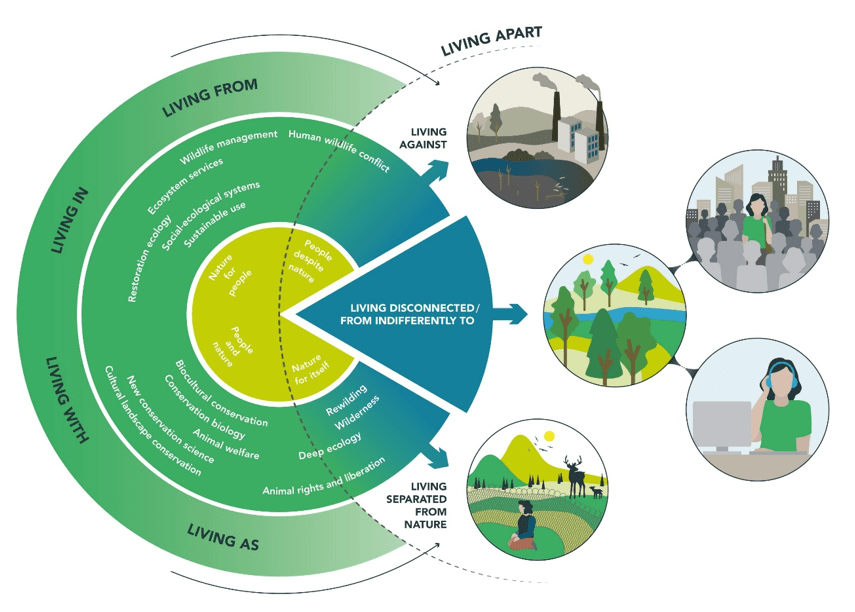
The concept of value indicates the worth something has for a person, group, or social context. People value things for different reasons, such as utility, meaning, and emotional connection. Most importantly, values influence our attitudes and the decisions we individually and collectively make. Ultimately, the values we hold shape our lives and the world around us. But values are unique to each individual and can differ between groups of people. These differences can sometimes lead to disagreements over how the world should be and how we should act within it. Our relationship with the natural world is also subject to differing value orientations, with social conflict often arising over the form which human-nature interactions should take. Moreover, values may often be difficult to express and be poorly represented in decision-making processes. Understanding the diversity and complexity of how people value nature is therefore essential for equitably transforming societies to more sustainable pathways.
Researchers have come up with several ideas and tools to understand and explain how people value and interact with nature. One such tool is the Life Framework of Values, which looks at how people may feel about nature, or certain aspects of it, based on their relationship with it. In our article, we assess whether the Life Framework of Values misses anything important. We find that it does, and we suggest adding the ‘living apart from nature’ frame, which includes the missing categories of ‘living against nature’, ‘living separated from nature’, and ‘living disconnected/indifferently to- nature.’ We identified these categories in pre-existing literature. We use the Life Framework of Values to explain how we get to this dimension via three different pathways: (1) by loving nature so deeply that you separate yourself from it, (2) by disregarding nature to the extent that you are willing to destroy it, and (3) by simply being indifferent or disconnected.
In order get a good understanding of the values that underpin human-nature interactions and to ensure that policies accurately represent them, we propose that the different value categories are assessed across a wide range of global regions.
 Relational Thinking