By Sílvia Gómez and Alfons Garrido
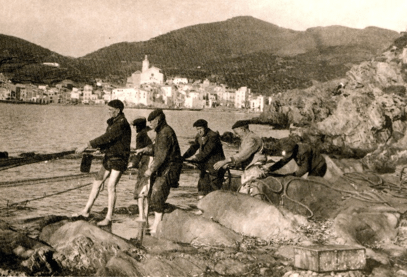
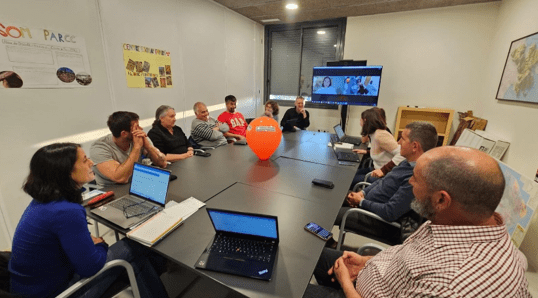
Over the past 15 years, co-management committees have been set up along the Catalan coast to address the increasing degradation of marine ecosystems, overexploitation and anthropogenic pressures. These committees also draw inspiration from a long tradition of self-management, reviving practices first developed by fishers’ guilds in the Middle Ages. In this paper, we explore how past experiences with common-pool resources relate to current struggles and what lessons they can offer to build more just and sustainable futures. We examine both continuities and discontinuities throughout the history of commons management and the development of its institutions for sustainability, considering shifting social and political contexts, fisheries and environmental policies, governance systems, and the rise of an ocean-based economy.
We approached this through two lenses. First, we examined historical documents from Catalonia and the wider Mediterranean. These records show that fishing communities organized themselves around communal rules, ensuring livelihoods, fairness, and collective well-being beneath a moral economy. Such systems rested on reciprocity and redistribution, which guaranteed basic needs and social peace. Yet history also shows how these communal systems were undermined by state centralization, privatization, and market expansion, leading to processes of “decommonization.” Second, we carried out ethnographic research in Catalonia and Cap de Creus Marine Protected Area. We gathered interviews with fishers, NGOs, businesses, and local groups, and performed observations in co-management committees and digital forums. These results revealed both fears—such as offshore wind farm, mass tourism, and biodiversity loss—and hopes, including restoration projects, new seafood markets, and community-led initiatives.
Our findings show commons are “timeless.” Resources like air, water, and the sea remain essential to life across all societies, and their defense has always been legitimate, regardless of political or legal systems. We argue that commons must be seen not only as legal or institutional arrangements, but as moral principles rooted in practices of cooperation, solidarity, and care. Historically, these principles were at the heart of community survival.
We conclude that today, these principles should be placed at the heart of the economic system itself. However, relying solely on community practices without institutional frameworks risks reproducing inequality and exclusion. Communities are not timeless, they shift with demographic, political, and economic change. Collective action therefore needs to be guided by fairness, reciprocity, and long-term sustainability. What is needed is a comprehensive transformation: one in which governments, businesses, and society work together to embed an ecological economy within political and legal systems, ensuring equity and justice.
 Relational Thinking