By Elisa Zanoni, Marco Cervino, Alba L’Astorina, and Alessandra Pugnetti
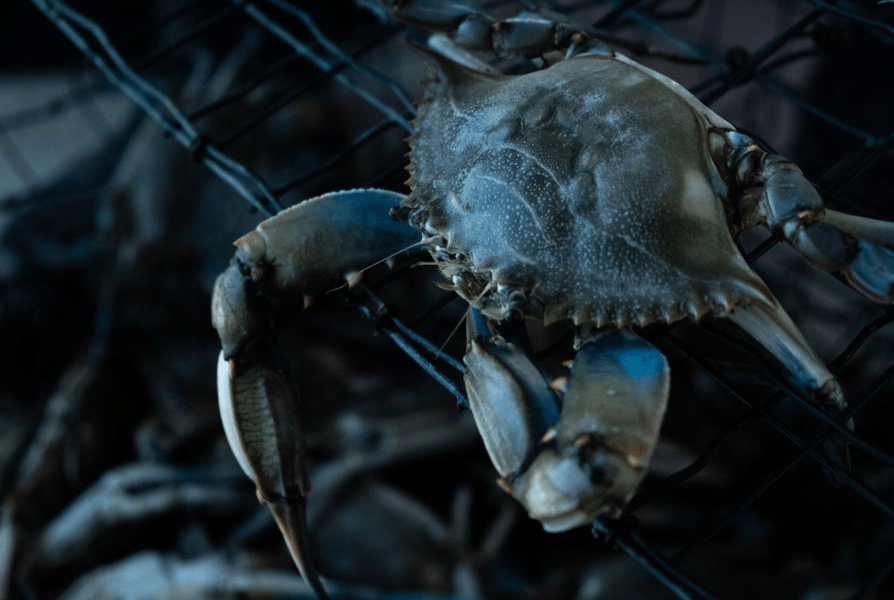
Invasive alien species are plants, animals, and other organisms that are non-native to an ecosystem, and that may cause harm to the environment, the economy, or human health. Our research looks at the blue crab, an invasive alien crustacean that arrived in the Lagoon of Venice (Northern Adriatic, Italy) from the western Atlantic Ocean through commercial shipping. We were particularly interested in the language used by journalists, politicians, and researchers to talk about the species.
We analyzed newspapers, press releases, social media posts, and academic journals. Our main goal was to understand the most frequently used communication strategies and how they influenced the way local actors – fishermen, politicians, researchers, citizens – reacted to the blue crab. We sampled 68 texts, searched for recurrent sentences and words, and grouped these patterns in categories. We also included a quantitative analysis to determine how often certain words and sentences appeared and how they were distributed across different sources.
We found four recurring sentences across the sources: “We have transformed the threat of blue crabs into an opportunity”; “We are at war against the blue crab”; “Consumption is a solution”; “The blue crab is a product.” Each one gives an oversimplified picture of the blue crab in the Lagoon of Venice, promoting the perception of the species as an object to be collected and sold, or as an enemy to fight with every possible means.
Based on these findings, we provided four recommendations for professionals working with the blue crab and other invasive species: (i) refrain from using emotive language such as “we are at war” and (ii) metaphors, such as “killer of the seas”. These communication strategies may lead to unforeseen consequences, such as violent reactions against both alien and native species. (iii) Do not oversimplify the issue because it can disseminate false or partially false information. (iv) Promote close collaboration between scientists, managers, and all the other relevant actors, to ensure that management strategies align with sustainability and conservation principles.
 Relational Thinking