By Jessica E.M. van der Wal, Pietro B. D’Amelio, Celestino Dauda, Dominic L. Cram, Brian M. Wood, and Claire N. Spottiswoode
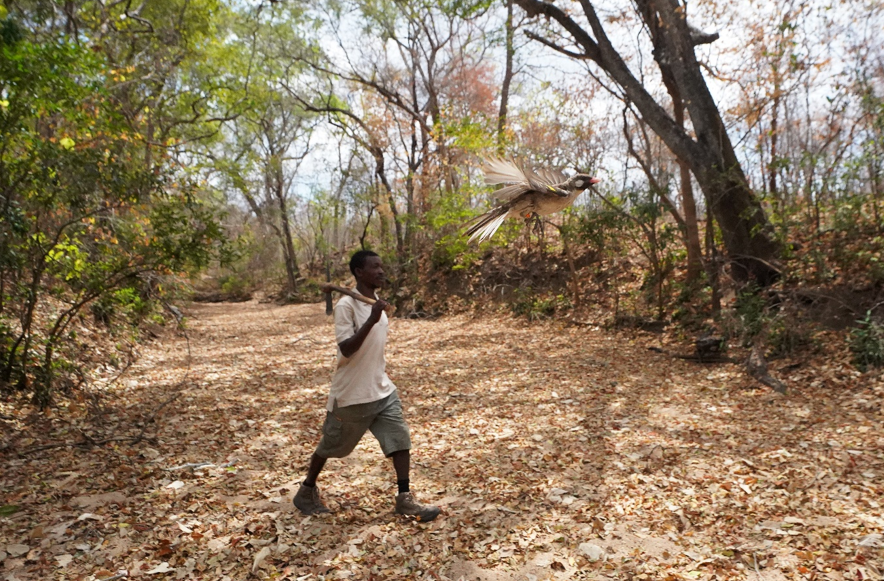
In parts of Africa, people work together with wild birds called greater honeyguides. These birds lead people to honey, and in return, the honeyguides feed on the wax and larvae left behind. Both species benefit from this mutualism, which happens without any training or domestication. Remarkable, it even involves a two-way communication between species. We wanted to better understand how people communicate with wild honeyguides, particularly how and why these calls differ across nearby communities.
We recorded the calls that Yao honey-hunters use to communicate with honeyguides in 13 villages in northern Mozambique. We asked whether the calls varied in the same way regional dialects in human language vary. We found that the trills, grunts, whoops, and whistles used to call to honeyguides changed gradually with distance, forming something akin to local dialects. The surrounding habitat did not explain the differences. Instead, the dialects that people use to communicate with honeyguides likely reflect human social factors. People moving between villages also adopted the local call. The birds likely help reinforce and maintain local dialects.
Our findings show that cooperation between humans and wild animals can lead to shared communication systems that vary culturally across space, illustrating how flexible and adaptive human communication can be, even when directed beyond our own species.
 Relational Thinking