By Daniel Oro, Joan Bauzà, and Miquel Grimalt
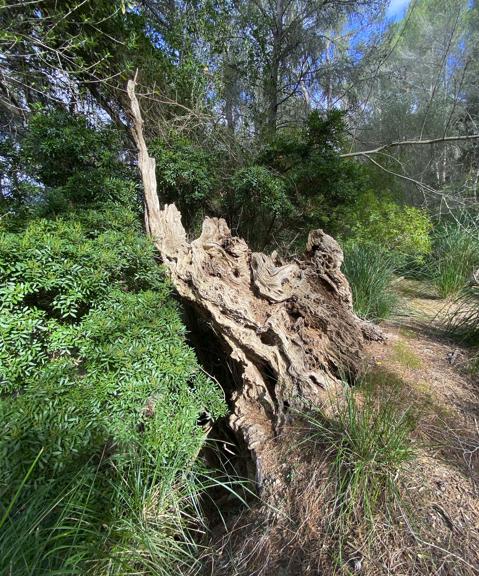
When agricultural practices are abandoned in rural areas, the land begins to transform. In the Tramuntana mountains of Mallorca, a UNESCO cultural landscape, we studied how 70 years of this decline turned fields into forest and altered the way wildfires burn.
Our results show that much of the farmland has been taken over by forest. This change has not been uniform across the landscape: some areas experienced more rapid forest expansion than others, reflecting the spatial diversity of land abandonment and the timing of when farming activities, such as charcoal and lime production or controlled burning, ceased. Regarding fire, the decline of traditional practices, like burning small patches of land to manage shrubland, coincides with the occurrence of larger wildfires.
To study these changes, we combined old black-and-white aerial photographs from the Cold War era with modern satellite images and computer models for mapping the transformation. We also talked to local people who had managed the land in the past. Their memories of practices such as charcoal making, terrace farming, and controlled burning to improve pasture quality for livestock helped us interpret the images and gave us a human perspective on the transformations. By joining quantitative data with local knowledge, we ensured a more accurate and meaningful picture of how the landscape has evolved.
Our approach not only helped us understand Mallorca’s changes but can also be applied to other Mediterranean regions facing similar trends of rural abandonment and fire risk. At the same time, collecting the memories of older generations is urgent: these people hold unique knowledge that may soon be lost.
In short, the combination of modern technology and traditional memory offers a powerful way to understand land change and to design better strategies for managing wildfires in the Mediterranean.
 Relational Thinking