By Jane Faull, Laura Griffin, Grace Nolan, Amy Haigh, Anna David, Sarah Redmond, Niamh Collins, Paul McDonnell, Adam Kane, and Simone Ciuti
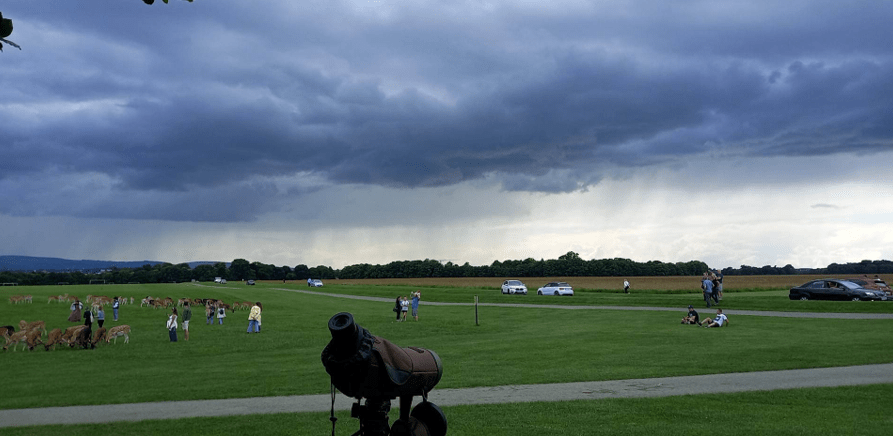
Many of us want to feel closer to nature, especially as city living and online life take up more of our time. From feeding garden birds to joining safari tours, people seek ways to connect with wildlife. These experiences often feel harmless, for example, giving food to a wild animal seems like an act of kindness. The animal gets an easy meal, and we get a memorable moment. But feeding wildlife can change how animals behave and affect their health in ways we don’t always see.
In our research, we explored seven years of efforts to manage deer feeding in a popular enclosed park in Dublin. We wanted to understand what kinds of actions actually help reduce feeding and which don’t. We looked at how park ranger patrols, signs asking visitors not to feed the deer, and social media campaigns influenced behaviour across seven summers.
At first, each new measure worked: fewer people fed the deer and awareness improved. But these successes didn’t last. Once a campaign ended, feeding quickly increased again the next year. This pattern suggested that short-term efforts and one-off messages aren’t enough, especially when visitors include both locals and tourists.
Our findings show that managing wildlife feeding needs ongoing attention and creative solutions. Campaigns should be continuous, adaptable, and designed to reach different audiences. Without consistent management and communication, the problem simply returns, proving that if you leave it, you lose it.
 Relational Thinking