By Lindsay P. Galway
Climate change is not only an environmental, economic, and social crisis—it is also deeply emotional. Many people are experiencing complex and interconnected emotions in relation to climate change. Climate emotions can be challenging and overwhelming, especially in remote, rural, and small communities where daily life and economies tend to be closely tied to the natural world.
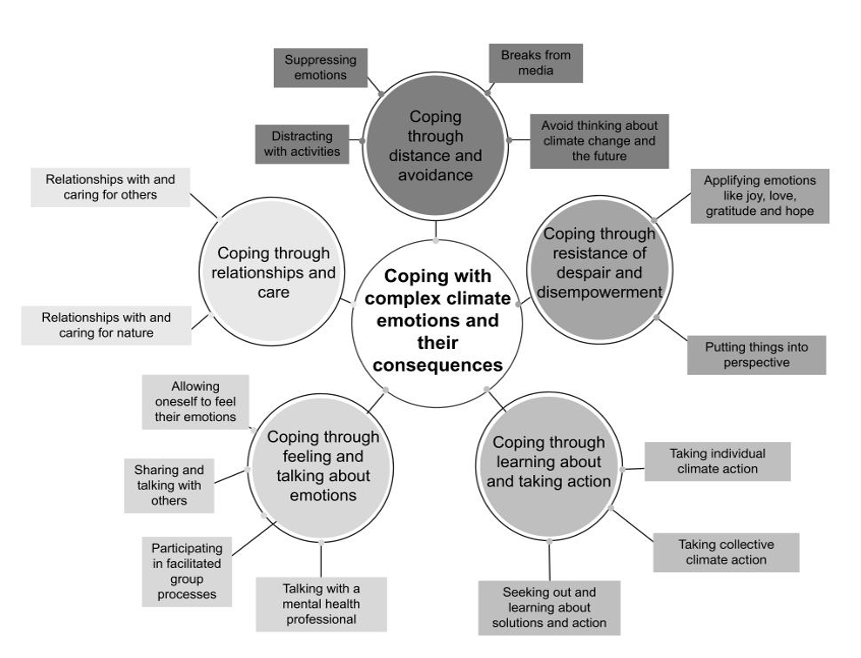
Using in-depth interviews and a letter-writing process, this study explored how 27 people living in remote, rural, and small communities across Canada cope with climate emotions. We analyzed the interview and letter data using thematic network analysis; a method that identifies patterns, meaning, and themes in textual data. The data showed that coping, like climate emotions, is complex and dynamic. Participants described an array of specific strategies. Some engaged in activities to distract themselves or avoid thinking about climate change, which helped to prevent overwhelm and total despair. Others found strength in allowing themselves to feel their emotions fully, or by talking about their emotions with trusted friends, family members, or in community groups. Coping through relationships, with other people and with the natural world, was a strategy all participants used. Taking action, individually and collectively, was also an important coping strategy for many. Finally, several participants spoke about purposefully resisting despair and disempowerment and actively cultivating hope, gratitude, and love as a means of coping.
From these stories, the study introduces the idea of connected coping: managing climate emotions through relationships with people, with nature, and through collective action. Supporting connected coping could strengthen mental and emotional well-being, reduce social silencing, and help communities respond to the climate crisis together.
 Relational Thinking